


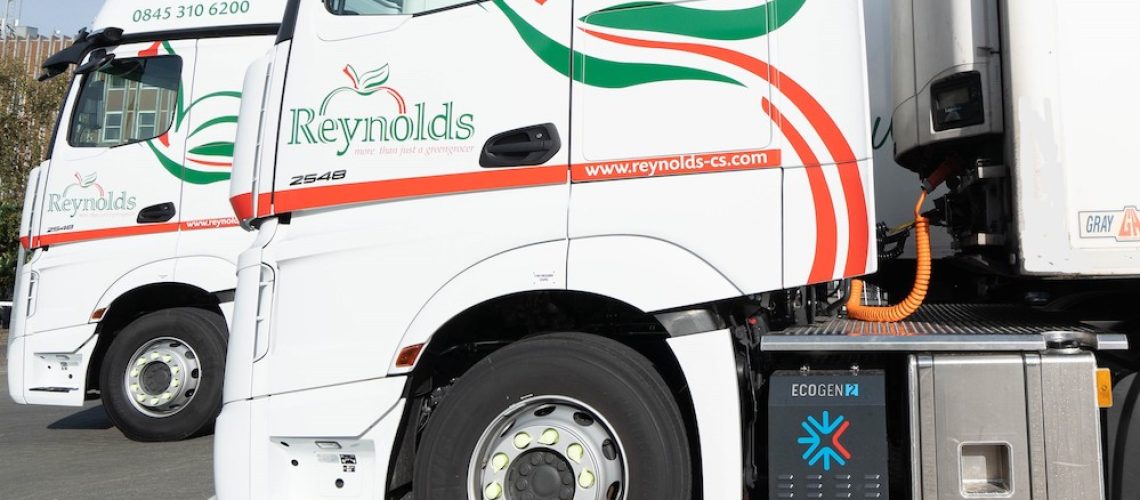
Reynolds, the national food service provider, has announced the purchase of five Mercedes-Benz Actros tractor units fitted with Hultsteins Ecogen 2 refrigeration systems. The firm now operates a fleet of 220 vehicles, comprising 30 vans and 190 HGVs, along with 21 trailers, all of which are refrigerated.
“I was familiar with Hultsteins and I liked the other products, such as the Slimline hydraulic refrigeration system. When I was looking at bodybuilding spec for new vehicles, I spoke to them again and had a look at the Ecogen units,” said Steve White, Reynolds’ Head of National Fleet.
So far Reynolds has put great efforts into reducing its carbon emissions and becoming more sustainable. The company has invested in electric vehicles and a zero-carbon farm and now, with the purchase of the Ecogen 2 systems, it will be cutting the emissions of its transport refrigeration units (TRUs) and slashing diesel costs.
One of the biggest advantages of the Ecogen 2 system is that it can be retrofitted to any tractor unit with an engine power take-off, converting existing diesel TRUs to run on electricity. It generates 400 volts and connects to the fridge motor via a five-pin plug. As well as adapting TRUs to emissions-free power, the Ecogen system represents a highly cost-effective method for operators to adopt cleaner refrigeration systems, because there is no requirement to replace existing trailers or TRUs.
“We’ve got 17 frontline trunking HGVs, so we decided that, on renewal, we would fit the Ecogen system to five Mercedes-Benz Actros tractor units, which are on contract hire from NRG Riverside. Obviously, there was the removal of the red diesel subsidy on 1 April this year, so that was a big incentive for us from a fuel-saving perspective, but we also have a series of sustainability projects and a plan to reduce our overall carbon footprint, so I felt it was a good product to trial,” added Steve.
Steve estimated that each Ecogen 2 unit that entered service with Reynold would save at least £5,000 per year in diesel costs and more than 1,900kg of CO2 per annum. “The gameplan is to convert the entire HGV fleet to Ecogen 2 units because, from an emissions point of view, it’s the way forward – and we can reduce our fuel bill. If you look at the payback, it’ll take about two to three years to cover the cost of the units, and there are additional benefits, such as shouting about the fact that we’re a sustainable company adopting clean, technologically advanced equipment,” he concluded.