


About 9,211 import-export containers were moved by rail between Chattogram port and the Kamalapur Inland Container Depot (ICD) in Dhaka during the January-February period of the current calendar year.
During the first two months of 2022, some 19,078 containers were shipped between the port and the ICD, a 52 per cent decline.
“Transport of goods via railway has fallen due to the drop in imports and exports. The situation will return to normalcy if international trade activities rise again,” said Enamul Karim, director (transport) of the Chattogram Port Authority (CPA).
As per data compiled by the CPA and Bangladesh Railway, 101,763 containers carrying 8.31 lakh tonnes of import-export goods were transported on the Dhaka-Chattogram route in the last fiscal year of 2021-22.
This was the first time in about 17 years that more than one lakh containers were transported using the railway, earning the government Tk 113.59 crore as revenue.
In 2006-07, a total of 5.74 lakh tonnes of import-export cargo in 76,243 containers were transported on the route, collecting the government Tk 52.34 crores as revenue.
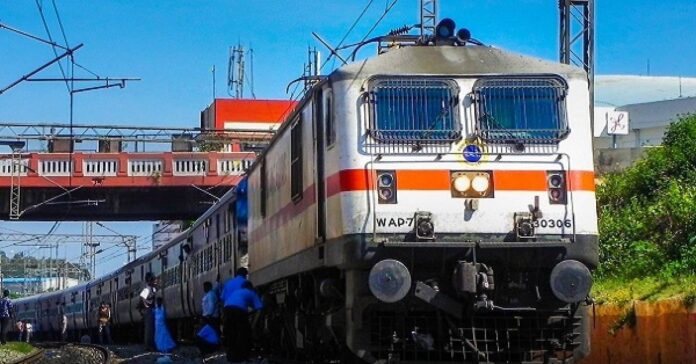
Bangladesh Railway has set aside 16 freight trains to ship goods on the route. About 10 were used in January and February.
The trains made up to 185 trips between Dhaka and Chattogram each month in 2021 and 2022, on average. The number of trips fell to 135 and 121 in January and February, respectively.
Karim thinks it will be possible to increase the usage of freight trains to transport import-export goods by generating awareness among businesspeople about the benefits, such as safety and cheaper costs.
“Railways and port authorities have held several discussions to this end and initiatives are being taken to make the rail transport easier and faster as well,” he said.
Importers and exporters once preferred the freight train service. Now, they mostly use the road network since it is the quickest option.
“The railway authority should ensure faster services to generate interest among businesspeople,” said Mahbubul Alam, president of the Chattogram Chamber of Commerce and Industry.
“About 3-4 per cent of the import-export goods at Chattogram port are transported by rail. So, the pressure on the country’s roads and waterways would reduce if the railway offers better facilities.”
It currently costs between Tk 9,700 and Tk 16,100 to ship containers weighing 20 TEUs (twenty-foot equivalent units) on the Dhaka-Chattogram route by rail while it ranges from Tk 16,100 to Tk 22,600 for 40 TEUs.
Jahangir Hossain, general manager of the eastern zone of the Bangladesh Railway, said the railway is now providing more facilities as it has increased the number of locomotives and manpower.
“But there is not much demand for containers from traders due to the reduced import and export flow.”
Hossain informed that several initiatives have been taken to increase the quality of rail services.
At present, 280 kilometres of the 320-kilometre Dhaka-Chattogram railway line have double tracks.
“By 2024, the entire railway will have double lines. Then it will be possible to transport goods faster than now,” he said.