


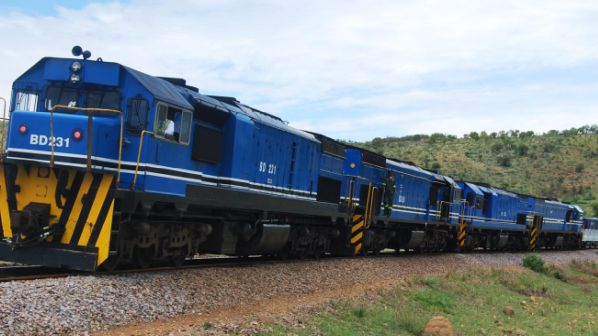
SOUTH Africa and Botswana have agreed to repair the railway between the two countries to improve cross-border freight links.
Following high-level talks, Transnet Freight Rail (TFR) and Botswana Rail (BR) will implement joint development initiatives to repair sections of the 126km line between Mafikeng, on the border with Botswana, and Swartruggens, in South Africa’s North West province. This will allow trains travelling from landlocked Botswana and carrying minerals, including coal, to reach the South African ports of Richards Bay and Durban to access export markets more efficiently.
The line upgrade project will be funded jointly by the two countries’ governments, while TFR and BR will be given the responsibility of implementing the initiative, with the objective of restoring operation within the next two years.
TFR and BR will also build a 60km high-capacity connecting line from Mamabula in Botswana to Lephalale in Limpopo, to move export coal to Richards Bay that currently takes a much longer route with restricted capacity.
TFR and BR will also collaborate on security measures to curb the major problems of cable theft and vandalism to railway infrastructure, which are on the rise in Botswana and are already a major problem in South Africa, having a severe impact on efficient train operations. Large-scale theft of copper cables in South Africa has in recent years affected TFR’s ability to transport minerals, leading some mine operators to switch to road transport.
According to reports by news agency Reuters, in May of this year Botswana’s president, Mr Mokgweetsi Masisi, said in an interview at the Mining Indaba conference that his country had received requests from European countries for imports of African coal in the wake of Russia’s invasion of Ukraine.
Botswana, which in the past has mainly supplied neighbouring countries, is therefore looking to reap the benefits of increasing production of coal for export. The strategy to improve the rail link between the landlocked country and South African ports is seen as part of this.