


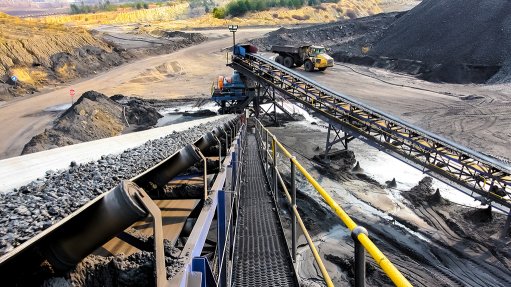
Bolloré Logistics taking part in a mining project in Côte d’Ivoire which involved handled the transportation of mills divided in four main parts, totalling 177 tonnes of equipment. (Image source: Bolloré Logistics)
This lesson has been most readily demonstrated in recent months by the strike action affecting Transnet’s rail and port network in South Africa. The Minerals Council South Africa estimated that bulk mineral exporters lost around R815mn (approx. US$45mn) worth of exports per day during the walkouts because they were unable to rail and load around 357,000 tonnes of iron ore, coal, chrome, ferrochrome and manganese onto ships daily.
“Around R151bn (approx. US$8.3bn) could be gained [on an annual basis] in additional exports, with the concomitant benefits of employment in mining increasing by 40,000 jobs to 500,000, the fiscus benefiting from improved tax revenue and higher revenues for Transnet if all rail and ports systems were optimally and efficiently run at design capacity,” the Minerals Council statement noted.
Such a challenge to one of the most important industries in one of Africa’s strongest economies is a stark reminder of the central role logistics plays within the mining sector.
Fortunately, there are a plethora of companies lining up to offer their services across the continent and ensure Africa’s mines can reach their full potential.
Mines in Africa are usually located in remote areas where access can be difficult for many reasons, such as lack of proper infrastructure (in some cases roads need to be built up to get access to the site); a need to deploy specialised equipment to handle out-of-gauge cargo; security issues in some areas, with necessity to escort convoys; and political sanctions (lately with border closure sanctions imposed on Mali, for example).
Some of the transportation solutions best suited to serving African mines
The choice of transport means depends on the location of the mine. Different means of transportation can be combined onshore from arrival at port; rail, road, river transportation (barge), and air, for example. Cargo safety also plays an important role when looking for the right transport solution. We have an extensive experience in the management of major industrial projects in the mining sector, from early works up to project execution. Our dedicated teams conduct feasibility studies in order to offer the best logistics solutions to our clients.
Some of the trends affecting services most on the continent
We have noticed growing concerns from our mining customers in regards to CSR. This includes, among others, a strict compliance with the regulations of the countries in which they operate. Mining companies are also much more aware of climate change concerns and promote sustainable projects. More and more solar plant constructions are being developed at mine sites. At the same time, sustainable fuels are used in the transport industry to reduce the carbon footprint for all means of transport.