


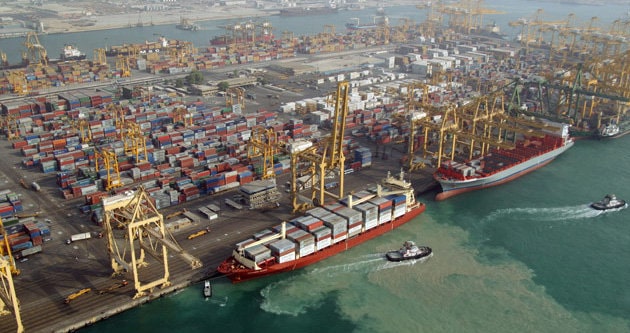
The pressure on the port chain is exerted by various elements, including the constraints of managing pending goods. The phenomenon observed in most African ports is becoming one of the main challenges for the authorities in charge.
Congestion could increase at Nigeria’s three major ports, Apapa, Tin-Can Island and Onne, with the increase in volumes of goods not removed by importers and placed under customs deposit regime, according to local media reports. Business Day.
Around 6 twenty-foot equivalent containers and 000 vehicles, as well as damaged goods, have been clogging up the container and roll-on/roll-off terminals of these ports for several months, the source reported.
These goods were allegedly abandoned by their consignees after accumulation of demurrage duties or detained by customs (NCS) for reasons such as under-declaration, misdeclaration, violation of import duties and smuggling.
The import legislation sets the period for the removal of goods at 28 days, after which they pass into the hands of customs, which is authorised to sell them at auction after a further period of 90 days, if they have not been claimed.
Some of these goods are said to spend up to 4 days in ports, taking up significant terminal space while the NCS struggles to organise sales.
The Nigerian Ports Authority (NPA), empowered by law to evacuate these backlogged goods to dedicated platforms such as the Ikorodu Container Terminal, is also struggling according to Business Day to assume this responsibility, arguing the high costs that their transport would require.
This phenomenon, also recursive in most African ports, becomes a fairly determining variable in the problem of port congestion which impacts the stay at the quay of ships and their stopover accounts, which are billed to shippers including congestion surcharges.
It is also felt through the lengthening of delivery times for importers, who having incurred higher costs, pass them on to end consumers.
The Lagos Chamber of Commerce and Industry (LCCI) had indicated in a report published in 2018, that beyond the consequences on the financial resources of importers and consumers, the congestion caused the national economy to lose about USD 19 billion.