

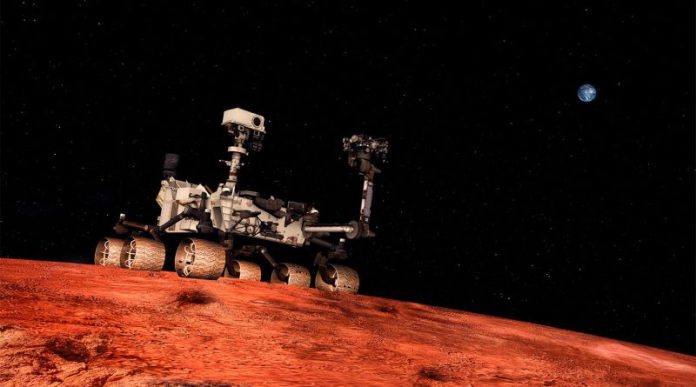
NASA’s Perseverance rover has uncovered a set of Martian rocks in Jezero Crater that could change how we think about mineral formation and resource potential on other planets
The discovery of iron phosphate and iron sulfide minerals intimately associated with organic carbon in Jezero Crater’s Bright Angel formation is offering scientists new insight into planetary geochemistry. Through detailed petrographic, chemical and spectroscopic analysis, the Perseverance rover’s instruments revealed a combination of redox-sensitive minerals and textures previously unseen on Mars.
These findings open the door to questions about the possible role of organic matter in mineral formation beyond Earth. But perhaps more immediately, they are influencing how Earth-based industries may reconsider mineral genesis, distribution and the untapped value of low-temperature sedimentary systems.
Mineralogical evidence from Mars
Perseverance’s investigations in the Neretva Vallis channel uncovered layered mudstones and conglomerates rich in silica, aluminosilicate clays and ferric iron. High-resolution imaging and spectroscopy confirmed the presence of nodules and reaction fronts, often just hundreds of microns wide, where iron and phosphorus became concentrated.
The iron phosphate identified matches the composition of vivianite and its oxidized variants, while sulfide minerals such as greigite appear in localized reaction fronts. These minerals are closely associated with organic carbon, which was detected via Raman spectroscopy. In Earth analogs, such associations are often considered biosignatures or byproducts of microbial activity.
Mars’ surface conditions differ markedly from Earth’s. Yet the rocks studied here appear to have experienced only low-temperature diagenesis, lacking signs of high heat or pressure. This has led researchers to investigate both abiotic and potentially biological redox pathways that could explain how iron and sulfur were reduced and redistributed to form these minerals.
Shifting expectations in mineral resource science
For geologists and mining professionals, the mineral phases discovered in Jezero Crater are noteworthy. Vivianite is not typically found in abundance on Earth except under specific redox and depositional conditions, often linked with organic decay. Greigite, likewise, forms as an intermediate in sulfate-reducing environments and is a precursor to pyrite in many sedimentary systems.
These Martian findings suggest that minerals of industrial interest can accumulate in low-energy, aqueous environments without the need for volcanic or hydrothermal input. This is relevant for ongoing reassessments of terrestrial basins where similar geochemical conditions might have been overlooked.
It may also change how mineral exploration models are applied, especially in brownfield or underexplored sedimentary regions. The recognition that iron, sulfur and phosphorus can self-organize into discrete mineral features at micron scales due to natural redox dynamics is likely to influence both academic models and industry practice.
Implications for space mining and planetary exploration
Resource utilisation strategies for future Mars or lunar missions have often focused on extracting water, regolith and basic volatiles. But if Mars is capable of hosting natural accumulations of iron phosphates and sulfides through sedimentary processes, then future missions may shift to include detailed mineralogical prospecting.
This is particularly relevant for companies developing off-world mining capabilities. The use of autonomous robotic systems to survey mineral potential in low-temperature, water-modified settings may become a priority. Such systems would benefit from the detection strategies already field-tested by Perseverance, including spectroscopic methods and micro-scale chemical mapping.
There is also a research opportunity in studying how these minerals concentrate metals such as zinc, nickel and copper. On Earth, vivianite and greigite can incorporate trace elements under specific pH and redox conditions. Understanding these processes on Mars could inform how similar conditions might be replicated or exploited elsewhere.
Looking ahead
The presence of organic matter associated with redox-sensitive minerals adds complexity to what Mars may still reveal. While not proof of life, the possibility that organic carbon played a role in reshaping local mineralogy is a compelling driver for sample return missions.
Whether through abiotic or biological processes, the formation of these micron-scale mineral features suggests that Martian sedimentary environments are capable of significant chemical reorganization. For mining science, planetary geology and future mission planning, that is a valuable insight in itself.
If verified by lab analysis back on Earth, the Sapphire Canyon core sample may become a reference for understanding both Martian habitability and mineral formation under cold, redox-active conditions. It represents not just a geological curiosity, but a test case for future resource thinking across planetary environments.