

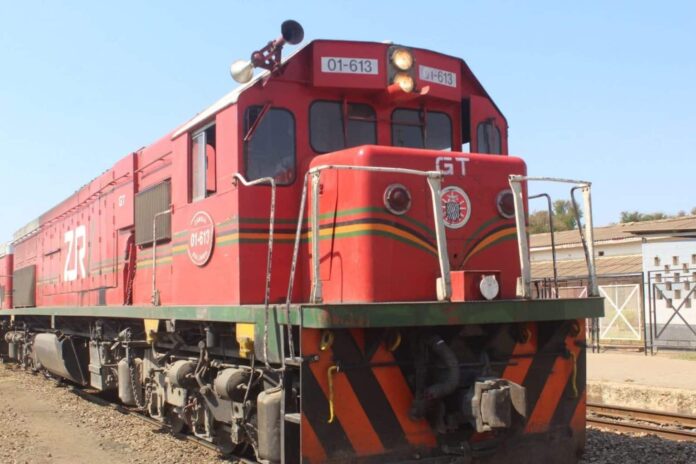
LUSAKA – Zambia’s ambitions to develop a modern and efficient railway system received a significant boost this week as the European Union (EU) announced a €50 million grant to Zambia Railways Limited (ZRL). The funding is earmarked for the rehabilitation of key railway tracks and the upgrading of signalling systems, marking a major step toward modernizing the country’s rail infrastructure.
The signing ceremony, held in Lusaka, was attended by high-profile officials, including EU Commissioner for International Partnerships Jozef Síkela, Zambia’s Minister of Transport and Logistics Frank Tayali, European Investment Bank Vice President Karl Nehammer, and EU Ambassador to Zambia Karolina Stasiak. The delegation toured the railway line from Ngwerere to Lusaka Station prior to unveiling the funding package.
EU officials emphasized that the support is intended to modernize Zambia Railways’ aging infrastructure, enhance signalling systems, and create opportunities for private operators. “A modern railway network not only reduces transport costs and congestion but also helps lower greenhouse gas emissions,” Síkela said, highlighting the EU’s commitment to sustainable and efficient transport systems.
Zambia’s government welcomed the investment, describing it as a crucial component in positioning rail transport as a central driver of national development. Minister Tayali noted that a modernized railway network is key to achieving the government’s target of producing three million tons of copper annually by 2031. “Efficient rail infrastructure will strengthen Zambia’s role as a central link in the Lobito Corridor, providing a shorter and more effective route to the Atlantic Ocean,” he said.
The Lobito Corridor project is expected to not only support the country’s mining sector but also expand opportunities in agriculture, logistics, and regional trade. EU officials said that their investment in Zambia Railways is part of a broader strategy to promote regional integration and sustainable economic growth through improved transport infrastructure.
Under the funding plan, Zambia Railways will focus on upgrading critical sections of its mainline, improving train speeds, and enhancing operational efficiency. The network, which has struggled with long-standing inefficiencies, is expected to benefit from safer, faster, and more reliable train operations once the improvements are completed.
Two major European logistics firms, C. Steinweg Bridge Zambia and Africa Global Logistics, attended the Lusaka ceremony and expressed optimism about the potential impact of the EU investment. Both companies highlighted that a modern rail system could revitalize Zambia’s transport and logistics ecosystem, making it more attractive to private investors and international trade partners.
Zambia Railways is controlled by the state-owned Industrial Development Corporation (IDC), which serves as the shareholder. The EU funding will particularly target the mainline between Livingstone and Ndola, one of Zambia’s busiest and most economically critical routes. The improvements are expected to not only support the mining and agriculture sectors but also contribute to broader economic development and regional connectivity.
With the €50 million investment, EU and Zambian authorities hope to transform Zambia Railways into a modern, competitive, and transparent system capable of supporting the country’s long-term economic goals. The project represents a major milestone in Zambia’s efforts to modernize its transport infrastructure while promoting sustainable growth across Southern Africa.