

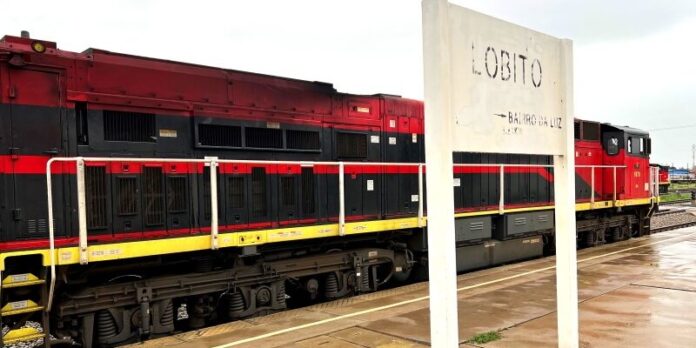
Game-changer for mineral logistics in Central and Southern Africa
The long-awaited Lobito Corridor rail project—set to reshape how bulk minerals are moved across Africa—has picked up serious momentum, with U.S. backing, European investment, and growing private sector interest.
Designed to link the Democratic Republic of Congo (DRC), Angola, and Zambia, the Lobito Corridor will provide a direct bulk cargo route from Africa’s mineral-rich interior to the Atlantic port of Lobito, unlocking faster, more reliable access to global markets.
“We see the Lobito Corridor as a catalyst for economic transformation—not just for the DRC, but for Africa’s entire logistics landscape,” said U.S. Ambassador to the DRC, Lucy Tamlyn, in a recent interview.
A Modern Rail Lifeline for Africa’s Critical Minerals
In an era where copper, cobalt, and lithium are essential for powering electric vehicles and renewable energy systems, the corridor offers a strategic bulk handling solution for getting these high-demand commodities to market efficiently.
Phase one of the project will focus on rehabilitating existing railway infrastructure, with technical support from the European Union and financing from institutions like the European Investment Bank.
On June 17, 2025, stakeholders—including the U.S., EU, and DRC government—gathered in Kinshasa to launch feasibility studies, led by DRC’s Minister of Transport Jean-Pierre Bemba.
Initial feasibility results are due in September, with a detailed economic and logistics model expected in October. This will guide private-sector concession agreements and bulk transport strategies across the corridor.
Why This Matters for Africa’s Bulk and Cargo Sectors
For Africa’s bulk handling and cargo logistics operators, the Lobito Corridor signals:
-
Reduced pressure on overburdened eastern and southern routes
-
Improved turnaround times for copper, cobalt, and lithium exports
-
A critical alternative to congested ports like Durban and Dar es Salaam
-
Increased investor confidence in African rail and bulk infrastructure
The project is being developed in partnership with the Lobito Atlantic Railway international consortium, with European and U.S. firms poised to take up major logistics and operations roles.
“This is not aid—this is investment,” Tamlyn stressed. “We want a model that gives the private sector confidence while ensuring benefits flow back to local economies.”
As the Lobito Corridor evolves, it’s expected to become a core artery in Africa’s mineral logistics network, supporting heavier volumes, more efficient port access, and better regional integration.