


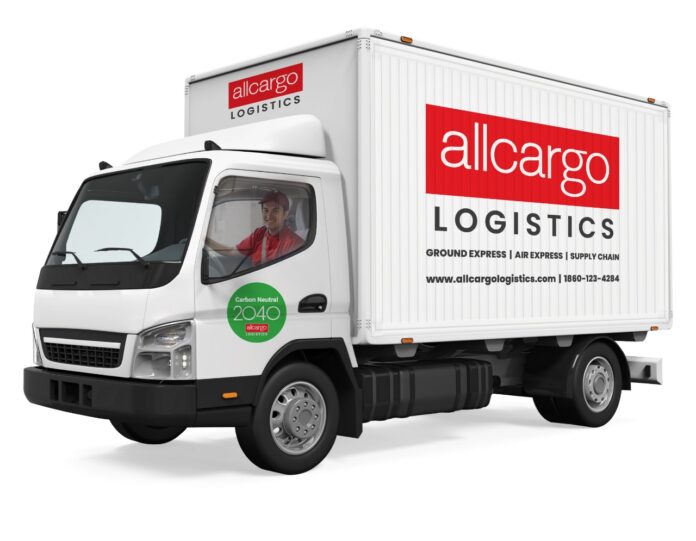
Allcargo Logistics Limited, housing its Domestic Supply Chain business, Express Distribution and Consultative Logistics has announced its initiative to enable FMCG companies to navigate increasingly fragmented inventory flows through integrated, technology-driven logistics solutions.
The move comes at a time when India’s Fast-moving Consumer Goods (FMCG) sector is undergoing rapid transformation. As product portfolios expand and consumer preferences continue to evolve, supply chains are becoming more complex, making efficient inventory management and agile logistics capabilities critical for companies operating in the space.
The modern FMCG landscape is no longer defined by high-volume, uniform product movement. With companies expanding portfolios through new launches and startup acquisitions, demand patterns are becoming more segmented, leading to smaller shipment sizes and more frequent replenishment cycles. This shift is accelerating the adoption of Part Truck Load (PTL) logistics, replacing traditional reliance on Full Truck Load (FTL) models for several distribution requirements.
Historically, FMCG supply chains followed a linear model – moving goods from manufacturing units to depots, then onward to distributors and retailers. However, today’s reality involves multi-directional inventory movement across states, warehouses, and consumption centres, requiring significantly higher coordination and agility.
Allcargo Logistics is addressing these challenges by reimagining supply chain frameworks for FMCG players through a combination of network optimization, technology integration, and transportation planning.
Commenting on the development, Ketan Kulkarni, MD & CEO, Allcargo Logistics, said, “The FMCG sector is undergoing a structural shift, where supply chains need to be far more responsive, flexible, and data-driven than before. As product portfolios expand and demand becomes more fragmented, logistics is no longer just about movement – it is about intelligent execution. At Allcargo Logistics, we are focused on enabling this transformation through integrated solutions that enhance visibility, improve efficiency, and support business growth across markets.”
With an operational footprint spanning 32000+ pin codes across Bharat, Allcargo Logistics enables seamless interstate movement of more than 60,000+ packages monthly for India’s organizations across industries.
The company’s network design allows FMCG brands to dynamically route shipments based on demand patterns, warehouse inventory, and dispatch locations – ensuring efficient inventory balancing across regions. For interstate routes, this specifically refers to inter-depot transfers that help manage inventory during demand spikes in particular states. By enabling the movement of the right quantity of inventory between depots – without waiting to consolidate a full truck load, customers can respond to demand much faster. At the same time, this approach ensures more precise stock allocation across locations, reducing the risk of overstocking specific products or SKUs.
Additionally, the rise of startup backed FMCG brands catering to Gen Z and health-conscious consumers has led to a proliferation of SKUs, each with relatively lower volumes but higher frequency requirements. This evolution makes traditional FTL movement less viable.
Allcargo Logistics is partnering this transition by offering PTL services, enabling flexible, cost-efficient movement of smaller consignments. This approach improves truck utilization, reduces idle capacity, and ensures faster inventory rotation across markets. PTL logistics enables businesses to move mid-sized consignments that do not require a full truck while still ensuring faster transit and lower handling compared to traditional transport models. By consolidating shipments from multiple customers into a single vehicle, PTL improves asset utilisation, reduces transportation costs and enables more frequent and flexible dispatch cycles for FMCG companies.
In an environment where real-time decision-making is critical, Allcargo Logistics integrates technology into every stage of the supply chain. Advanced tracking systems provide end-to-end shipment visibility, allowing FMCG companies to monitor inventory movement, anticipate disruptions, and optimize replenishment cycles with greater accuracy.
Allcargo Logistics adheres to globally recognized standards including ISO 9000 for quality management, ISO 14000 for environmental responsibility, and ISO 45000 for occupational health and safety. These certifications underscore the company’s commitment to delivering reliable and compliant logistics solutions at scale.
As FMCG companies continue to expand their reach across India’s diverse consumption markets, the role of organized logistics partners is becoming increasingly critical. By combining scale, technology, and operational expertise, Allcargo Logistics is helping brands build resilient, future-ready supply chains that can adapt to the demands of a dynamic marketplace.