


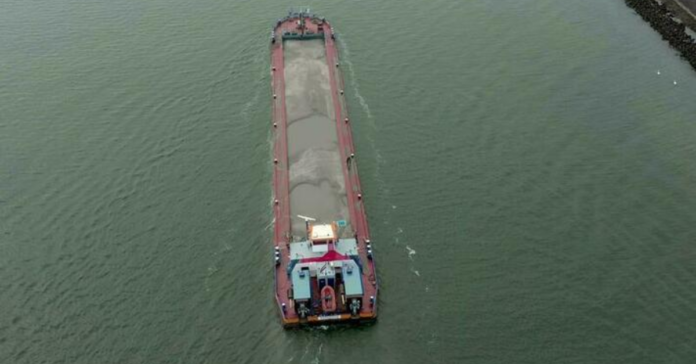
India’s inland waterways sector has achieved a landmark milestone with cargo transportation on National Waterways reaching an all-time high of 145.84 million metric tonnes in FY 2024-25 — a figure that places India’s waterways network among the most commercially active in Asia and reflects the cumulative impact of years of sustained investment in fleet expansion, waterway development, and terminal infrastructure under the National Waterways Act 2016. The record comfortably surpasses previous-year cargo volumes and establishes a strong base from which FY26 growth is already tracking even higher: cargo movement on national waterways had touched 198 MMT through the first eleven months of FY26, as of February 2026.
Passenger traffic on national waterways recorded an even more dramatic surge — rising to 7.6 crore journeys in FY24-25 from just 1.61 crore in the prior year, a nearly five-fold increase that reflects the rollout of new passenger vessel services and the growing adoption of water transport for short urban commutes in coastal and riverine cities including Kochi, Kolkata, Goa, and Varanasi. India currently operates 32 waterways covering 5,155 kilometres of its total 111 National Waterways spanning 20,187 kilometres, with the operational network expected to expand to 52 waterways over the next five years as new stretches are commissioned.
What Is Driving the Growth
The cargo growth on India’s national waterways is being driven by a combination of factors: the Jal Marg Vikas Project’s deepening of the Ganga Waterway (NW-1) to accommodate larger vessels; the commissioning of terminal infrastructure at Varanasi, Haldia, Patna, and Sahibganj; the expansion of the Brahmaputra Waterway (NW-2) serving Northeast India; and the integration of inland waterway routes with rail and road logistics through multimodal terminals. The Syama Prasad Mookerjee Port Kolkata’s first-ever midstream container transfer last week — directly loading export containers from an inland barge onto an ocean-going vessel at Diamond Harbour — represents precisely the kind of sea-river interoperability that makes waterway cargo commercially competitive.
The NW-57 delivery of 300 tonnes of cement to Hatsingimari in Assam via the River Kopili — reported in Monday’s newsletter — illustrates the inland waterways network’s expanding geographic reach into Northeast India’s previously underserved districts. With the Hormuz crisis making seaborne supply chains more expensive and less reliable, the domestic waterways network provides a cost-effective and disruption-resistant alternative for high-volume, low-value commodity movements between inland production centres and consumption markets — a role that the record FY25 cargo figures confirm is already being deployed at commercially meaningful scale.