


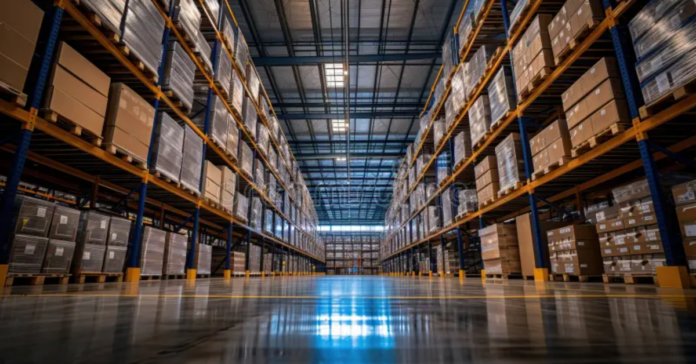
India’s warehousing sector is seeing a demand‑side recovery led by western markets such as Mumbai and Pune, even as developers and investors turn sharply cautious on committing new capital and supply. Recent data show leasing/absorption bouncing back from the steep correction in mid‑2025, with Q1 2026 pan‑India activity crossing 11 million–11.4 million sq ft, but this growth is heavily concentrated in a few western hubs.
Mumbai has emerged as the single largest warehousing market in the country, accounting for roughly 39–42 percent of quarterly absorption, driven primarily by strong traction in Bhiwandi and rising requirements from 3PL, engineering, manufacturing and consumer‑facing sectors. Pune’s share has also jumped markedly, with the city contributing close to 39 percent of national absorption in Q1 2026 after several large transactions closed, taking the combined Mumbai–Pune share in some recent quarters to more than 80 percent of total demand.
Despite this robust occupier activity, investment flows into new warehousing projects have slowed, as developers grapple with higher financing costs, expensive land in key micro‑markets and uncertainty linked to global geopolitical flashpoints that are affecting trade and supply chains. Many builders are delaying or downsizing new parks and adopting a build‑to‑suit or phased‑development approach, which could create a medium‑term mismatch between demand and supply and put upward pressure on rents in prime western locations.
Sector analysts note that policy support through the National Logistics Policy and continued infrastructure build‑out are keeping occupier sentiment positive, but warn that without a pick‑up in fresh capital deployment, recovery will remain uneven and skewed towards established western corridors rather than spreading evenly to emerging logistics hubs across the country