


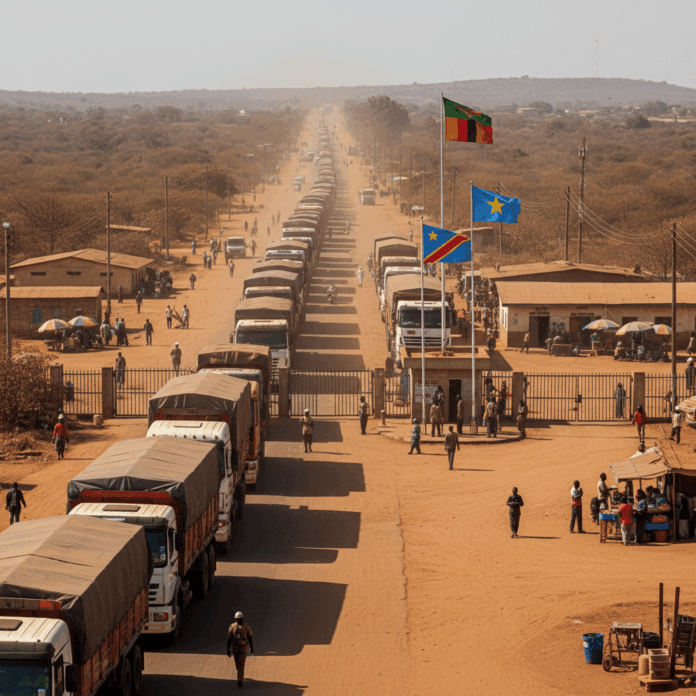
The Kasumbalesa border crossing is a critical transit point between the Democratic Republic of Congo (DRC) and Zambia, strategically located in one of Africa’s most significant and frequently congested border areas. Specifically, this crossing lies in the Copperbelt region, where it connects the DRC with Chililabombwe in Zambia. It serves as a vital export gateway for essential minerals such as copper and cobalt, which are transported southward through Zambia to access various regional ports.
The importance of the Kasumbalesa crossing cannot be overstated, particularly for operators involved in the freight movement of Copperbelt minerals. Given the heavy traffic and logistics challenges associated with this crossing, a comprehensive understanding of the process is paramount for efficient operations. This guide offers in-depth insights into the expected waiting times, necessary documentation, common delays encountered, and practical tips for navigating this bustling corridor effectively.

Location and Corridor Served

Kasumbalesa is strategically positioned approximately 30 kilometers north of Chingola, an essential town in Zambia’s Copperbelt Province. This border post is directly adjacent to the Katanga Province of the DRC, reinforcing its role as the main land port for the mining heartland of the DRC, which encompasses major mining centers such as Lubumbashi, Kolwezi, and the expansive Katanga copper belt.
As a pivotal junction on the North–South Corridor, Kasumbalesa facilitates the transit of freight from the DRC to various destinations, including:

– Zambia, with further access to southern routes leading to Zimbabwe, Botswana, and South Africa.
– Dar es Salaam via the TANZAM Highway, accessible through Tunduma.
– The Beira and Nacala ports in Mozambique through well-established corridor routes.

– Durban, which is a frequently utilized export route for DRC copper.
Waiting Times at Kasumbalesa
One of the most prominent features of the Kasumbalesa border crossing is its significant traffic congestion, which often ranks it among the most congested border posts in sub-Saharan Africa. Operators frequently encounter lengthy queues that can stretch several kilometers, creating substantial delays. The crossing often handles vast amounts of copper, cobalt, and general cargo, contributing to varying wait times as follows:
– Normal Period with Complete Documentation: Operators can typically expect a wait time ranging from 1 to 3 days under standard conditions with all necessary paperwork in order.
– Peak Export Season for Copper/Cobalt: During peak export periods, which are crucial for economic activity, wait times can extend to 3 to 7 days, significantly affecting freight schedules and delivery times.
– System Downtime (ASYCUDA/TTPMS): Technical issues, such as downtime in the Automated System for Customs Data (ASYCUDA) or the Traffic and Transit Processing Management System (TTPMS), can result in additional delays of 2 to 4 days.
– DRC Border Closure: Any unexpected closure of the DRC border can lead to indefinite delays, severely impacting logistical planning and operations.
– Incomplete Documentation: If operators fail to provide the required documentation, they can expect an additional hold-up ranging from 3 to 7 days, which can be avoided with thorough preparation.
Understanding the intricacies of the Kasumbalesa border crossing is essential for operators within the Copperbelt Corridor. With the right preparation and knowledge of the current conditions and requirements, the challenges posed by this critical crossing can be managed more effectively, ensuring smoother transit of precious minerals from the DRC to international markets.
While the Zambian side has seen significant improvements thanks to the Tribal Trust Property Management System (TTPMS) and the ZRA’s ASYCUDA platform, the DRC side tends to be slower and more unpredictable. Feedback from operators indicates that the ZRA (Zambia Revenue Authority) processes clearances relatively quickly, while the DGDA (Direction Générale des Douanes et Accises) on the DRC side often accounts for the most delays.
This guide serves as a resource for operators to better navigate the complexities of the Kasumbalesa border crossing, enhancing their overall efficiency in transporting goods across this critical corridor.
The Tribal Trust Property Management System (TTPMS) and the Zambia Revenue Authority’s ASYCUDA platform have significantly improved operations on the Zambian side of the Kasumbalesa border crossing. In contrast, the Democratic Republic of the Congo (DRC) side continues to experience slower and less predictable processing times. Freight operators have reported that the ZRA clears shipments relatively quickly, while the DGDA (Direction Générale des Douanes et Accises) on the DRC side often causes delays.
Documentation Requirements at Kasumbalesa
Kasumbalesa is known for its extensive documentation demands for cross-border trucking into and out of the DRC. Key documents required include:
– Commercial invoice
– Packing list
– Bill of Lading
– DRC import/export declaration
– ZRA declaration
– Certificate of Origin
– COMESA transit documents
– OCC certificate
– Phytosanitary certificate
– Carbon tax payment
– COMESA Yellow Card insurance
– Driver passport
– DRC/Zambia visas
– Vehicle cross-border permit
Primary Causes of Delays
Delays at Kasumbalesa can be attributed to several key factors:
- A backlog in DGDA processing due to slow customs procedures and capacity challenges.
- Issues related to the OCC certificate, including instances of missing or incorrect information that can lead to cargo delays.
- Congestion and infrastructure limitations resulting in bottlenecks, particularly during peak travel times.
- Currency and payment issues, as customs charges must be paid in USD cash, with limited banking options available at the border.
- Security and political instability, which can adversely impact operations.
Border Conditions
The DRC faces unpredictable border closures, protests, and security incidents, which can entirely halt operations at Kasumbalesa.
Freight Flow
The primary direction of freight flow includes:
– Northbound (from Zambia to DRC): Consumer goods, food, mining equipment, fuel, building materials, and chemicals.
– Southbound (from DRC to Zambia): Copper cathodes, cobalt, strategic minerals (such as coltan and lithium), manganese, and zinc concentrates.
Practical Recommendations
To navigate the challenges of crossing at Kasumbalesa, consider the following tips:
- Engage an experienced DRC clearing agent for expedited processing.
- Secure the OCC certificate prior to arrival at the border.
- Carry cash (USD) for fees, as banking facilities are limited.
- Monitor the border status daily for potential closures or incidents.
- Allow a 5–7 day buffer for delivery commitments to accommodate common delays.
- Utilize load boards to locate southbound copper export loads.
Comparison with Other Crossings
Kasumbalesa holds a unique significance for transporting DRC Copperbelt cargo, as there are no alternative crossings like Chirundu or Kazungula available for this region.
Official Resources
For further guidance, reference the Zambia Revenue Authority (ZRA), the C-BRTA Cross-Border Permits, COMESA, and the SADC Transport Framework for documentation and customs clearance. It is worth noting that Kasumbalesa facilitates high-value freight, predominantly copper and cobalt, and often experiences delays during peak periods. Pre-clearing through the ZRA’s ASYCUDA World platform can considerably reduce crossing times.
