spot_img

Zamboye mine disaster: When...

Zamboye mine disaster: When a closed mine keeps operating, who is responsible?

Weba Chute System’s grounded...

Across the global mining sector, Discrete Element Method (DEM) simulation has become a standard feature...

Kal Tire expands mining...

Kal Tire’s Mining Tire Group has signed an agreement with Transcale Pty Ltd.,...

One system, one supplier:...

ACTOM, South Africa’s largest manufacturer, repairer, and distributor of electromechanical equipment, has reaffirmed...
Home Blog Page 32

Goldfields innovation protects underground mine access

World-leading autonomous solutions specialist RCT has fulfilled requests from mining clients and devised a unique warning system designed to prevent oversized equipment from getting stuck inside underground mining portals.

Staff from RCT’s branch in Kalgoorlie, Western Australia were separately approached by two major mining clients in the Goldfields and asked to devise a solution to prevent portal blockages which can severely disrupt regular mining operations.

Branch technicians subsequently produced the Over Height Portal Warning System which consists of a laser mounted at a particular height connected to a unit placed at the portal entrance.

The unit will produce an audible alarm and flash the word “STOP” to alert machine operators and nearby site personnel there is a potential over-height hazard.

Site personnel are able to determine the system’s field of view and isolate areas such as a corner or pole so that the system will only activate when it senses new objects.

RCT Kalgoorlie Branch Manager Rick Radcliffe said the local technicians were happy to rise to the challenge set by the company’s clients.

“The system was designed and built in our workshop here in Kalgoorlie and we supplied it to our clients who were quite happy with the result,” he said.

“Occasionally underground haul trucks try to re-enter the portal with their trays accidentally in a raised position and this causes the trucks to get wedged in the portal.”

“The time needed to dislodge the haul truck from the portal is very costly to the mining operation.”

“Therefore, the Over Height Portal Warning System is a cost effective and easy solution that will help keep mining operations running smoothly.”

Since its development the Over Height Portal Warning System has been sold to 10 mine sites throughout the Goldfields.

Empire Cat donates truck for raffle

Empire CAT of Phoenix, AZ, has donated a 2020 GMC Sierra 2500 SLT Diesel truck valued at $70,000 as the grand prize for the Society for Mining, Metallurgy & Exploration Foundation (SMEF)  Benefit Truck Raffle.

The proceeds are to support critical education, outreach and professional development programs for SMEF.

“Empire CAT has shown exceptional generosity to the Foundation by donating this unique vehicle for the Foundation’s benefit raffle,” said SME Executive Director David L. Kanagy.

“Their contribution will support the SME Foundation as it strategically invests in solutions to help solve the challenges facing the mining and minerals industries today.”

All proceeds raised from the raffle go to support the critical SME Foundation programs, including the PhD Fellowship and Academic Career Development grants, Miners Give Back, ABET, Professional Engineers Exam, the Minerals Education Coalition, and numerous scholarships. SMEF is the provider of services for the industry professional, the university student, and K-12 educators.

“For me it’s an honor to be a part of this initiative to continue to support SMEF and the important activities it does for the Industry,” said Josh Olmsted, Sr. VP Freeport-McMoRan Copper Operations and SMEF Trustee upon securing the donation.

“Empire Machinery has been a long-standing partner of the Mining Industry and the communities in which they work. This is a great example of them being committed to giving back to the industry in a way that is meaningful, not only for today but more importantly for our future.”

As the source of funding for education and outreach for SME, the Foundation will utilize this extraordinary benefit raffle to support the health of the industry by strengthening the professional workforce, enhancing mining–related education and educating communities about mining.

The truck will be on display on the MineXchange Exhibit Floor during the conference, and a Tailgate Party in 2020.

Russia Digitalises Africa’s Mining Sector to Increase Output

  • Russian companies have offered African countries solutions based on the internet of things (IoT) and artificial intelligence (AI) to boost mining production.

    The offers follow the realisation that traditional means are becoming increasingly expensive, with productivity falling due to technical maintenance costs, unreliable equipment, reactive troubleshooting, a lower equipment utilisation coefficient and accidents connected to the transgression of safety regulations.

    This was the prevailing theme at a panel discussion entitled: “The Mining Industry in Africa: New Russian Technologies and High Efficiency” held as part of the recent Russia-Africa Summit and Economic Forum in Sochi

    Igor Bogachev, Chief Executive Officer of ZYFRA, said the company was offering Africa an automated mining and transport management system as well as robotic technologies.

    He said the system of production control allowed for efficiency of the mine fleet and optimise ore production and transportation, increasing mining volume by 15 per cent.

    The robotic trucks performance is 20 per cent higher than that of the usual technology.

    “Our autonomous dump trucks are already operational in Russia and Morocco,” Bogachev said.

    David Francis, Prime Minister of Sierra Leone, said a country-wide aerial survey of geological resources had recently been conducted.

    “We now know the approximate volume and quantities of mineral resources that our country possesses,” he said.

    “We know that Russia has accumulated the knowledge and experience to help Sierra Leone evaluate all the information, enabling us to verify and confirm the amount, type and estimated value of the natural resources.”

    George Oyema, head of General Maniema Mining Company in Democratic Republic of Congo (DRC), said remote control technologies were effective in raising safety levels and increasing the company’s productivity.

    “This satisfies the interests of the labour unions, employers, owners and, ultimately, the state. It also increases the productivity of the industry safely,” Oyema stated.

    The mineral industry is key to the industrial potential and export of many African countries.

    Almost 75 per cent of foreign investment is destined for that sector.

Foreign currency payment-miners exempted in Zim

The mining firms have been permitted to pay their utility bills in foreign currency though it is just weeks after the government outlawed foreign currency as legal tender and officially reintroduced the Zimbabwean dollar a decade after it was wiped out by hyperinflation.


Zimbabwe’s Energy and Power Development minister Fortune Chasi made mention to the media in Harare that this will enable adequate power availability and prevent power cuts at various mining entities.

“The purpose of the structure is to ensure mining entities have sufficient power as we can’t afford stoppages,” said Fortune Chasi.


Fortune further added that mining firms will have to make separate arrangements with foreign suppliers for imports.


An article from News Day noted that the country is generating just 738 MW with Munyati power station at 16MW, Harare (15MW) Kariba (530MW) and Hwange

(177MW).


Besides the mining firms being affected, power outrages have crippled business, resulting in lost production, with companies forced to reduce work hours and rely on generators.


Large hotels in the resort town of Victoria Falls were also ordered to pay the state-owned power utility, Zimbabwe Electricity Supply Authority (Zesa) Holdings, in foreign currency as a “stop-gap measure so that tourists aren’t inconvenienced” by power cuts.


Zimbabwe is enduring 18 hours of load shedding as the generation capacity has plummeted way below the country’s peak demand of 1 800MW.

THIESS WINS $1.7B CONTRACT IN BOTSWANA

CIMIC Group’s global mining services provider, Thiess, through Majwe Mining Joint Venture (Majwe), has secured a A$1.7 billion contract at Debswana Diamond Company’s Jwaneng Mine Cut 9 project in Botswana.

Majwe, a joint venture between Thiess (70 per cent) and long-term local partner Bothakga Burrow Botswana (30 per cent), will provide full scope mining services over nine years, including drill and on-bench services, mine planning, equipment maintenance, load and haul, and mining operations.

This new volume-based contract follows Majwe’s successful completion of the Cut 8 project at the diamond mine in November 2018.

CIMIC Group Chief Executive Officer Michael Wright said: “This new contract strengthens Thiess’ presence in Botswana and builds on our operational and technical teams’ solid performance at Jwaneng since 2011.

“The relationship developed between Majwe and client Debswana Diamond Company, owned by the Botswana Government and De Beers, is a testament to all involved with the project.”

CIMIC Group Mining and Minerals Executive and Thiess Managing Director, Douglas Thompson, said: “I am pleased to be extending our long-term relationship with Debswana Diamond Company and Majwe, delivering scalable and innovative solutions that are tailored to our client’s production and expansion needs.

“This contract extends our compliance with Botswana’s Citizen Economic Empowerment Policy and to delivering sustainable mining.”

Multi-Purpose Container Terminal-Mozambique

0

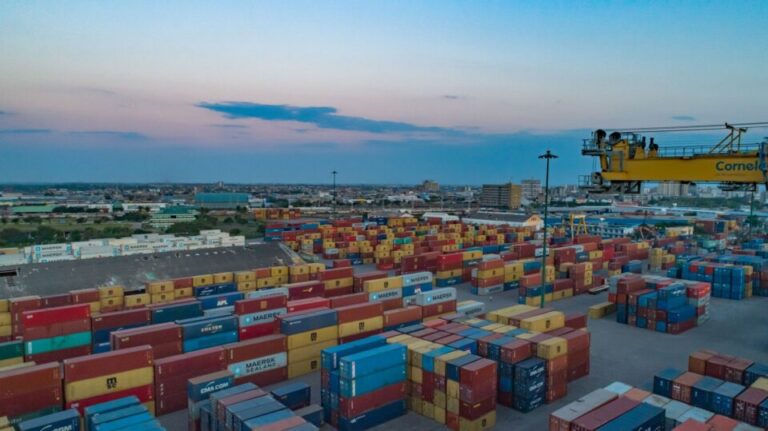
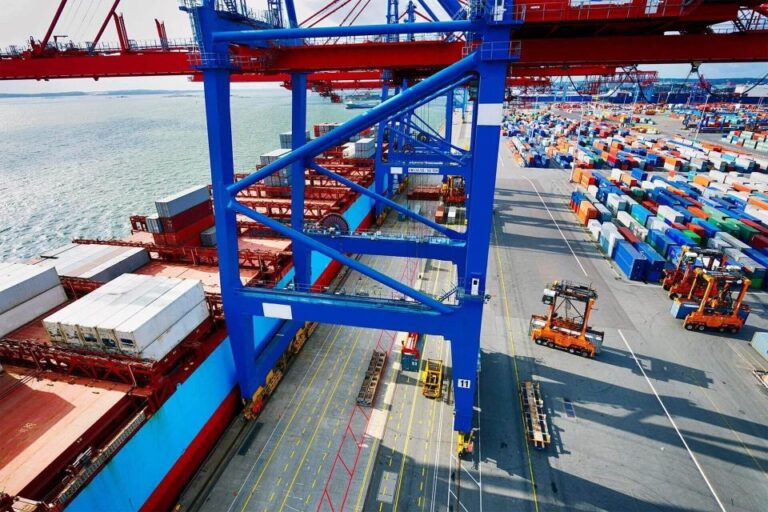
This is one of the most modern Terminals in Southern Africa. The facilities include a 645 meters long quay with a depth of 12 meters. The terminal has 4 container gantry-cranes, two of which have the capacity to carry 65 tonnes. The terminal can store more than 10,000 TEU’s and has 148 electricity connection points for refrigerated containers. Currently, the terminal can handle 300,000 TEU’s a year, but, with the continual investment programmed, its capacity could gradually be increased to 700,000 TEU’S. The terminal is served by an extremely modern computerized management system-Navis N4-regarded as the most advanced in the port industry worldwide. This is a computerized platform endowed with state-of-the-art technology which offers enormous advantages in increasing and improving the operations undertaken at the Container Terminal. It also allows online communications with shipping lines, the shipping agencies and clients who can accede to the mechanism to send correspondence concerning the loading and unloading of containers, and to obtain all the relevant information about the state of the logistical base. Recently, this terminal benefitted from an investment to increase the capacity of its container storage space to an area of 3 hectares, as well as the building of a new five lane access road, with the option to add a further two lanes in the future.

South Africa and Botswana to repair cross-border rail line

0

SOUTH Africa and Botswana have agreed to repair the railway between the two countries to improve cross-border freight links.

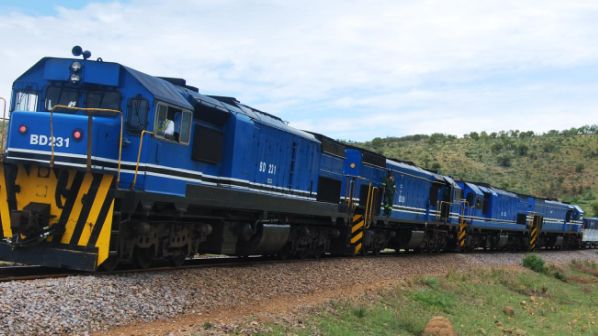
Following high-level talks, Transnet Freight Rail (TFR) and Botswana Rail (BR) will implement joint development initiatives to repair sections of the 126km line between Mafikeng, on the border with Botswana, and Swartruggens, in South Africa’s North West province. This will allow trains travelling from landlocked Botswana and carrying minerals, including coal, to reach the South African ports of Richards Bay and Durban to access export markets more efficiently.

The line upgrade project will be funded jointly by the two countries’ governments, while TFR and BR will be given the responsibility of implementing the initiative, with the objective of restoring operation within the next two years.

TFR and BR will also build a 60km high-capacity connecting line from Mamabula in Botswana to Lephalale in Limpopo, to move export coal to Richards Bay that currently takes a much longer route with restricted capacity.

TFR and BR will also collaborate on security measures to curb the major problems of cable theft and vandalism to railway infrastructure, which are on the rise in Botswana and are already a major problem in South Africa, having a severe impact on efficient train operations. Large-scale theft of copper cables in South Africa has in recent years affected TFR’s ability to transport minerals, leading some mine operators to switch to road transport.

According to reports by news agency Reuters, in May of this year Botswana’s president, Mr Mokgweetsi Masisi, said in an interview at the Mining Indaba conference that his country had received requests from European countries for imports of African coal in the wake of Russia’s invasion of Ukraine.

Botswana, which in the past has mainly supplied neighbouring countries, is therefore looking to reap the benefits of increasing production of coal for export. The strategy to improve the rail link between the landlocked country and South African ports is seen as part of this.

Maximising port fire safety

0

As 24/7 operation helps operators to keep pace with rising demand, and new technological innovations help to improve efficiency, ports across the globe are seeing an increase in fire safety risks. 

What are your obligations?

There is a need for industry-specific legislation in the ports industry to guide operators through the evolving risks, ensuring maximum safety and minimal downtime. The standard health and safety laws (HSW Act (1974) and Management of Health and Safety at Work Regulations (1999) apply, however there is no port-specific, mandatory legislation to guide protection measures against rising fire risks.

The HSE’s Approved Code of Practice, ‘Safety in Docks’ supports those in the industry who have a legal obligation to comply with the relevant standard health and safety laws mentioned above. However, it doesn’t fully address all issues associated with health and safety at docks and ports. The Port Marine Safety Code (2016), developed by the Department of Transport, is an optional standard for port operators to follow, but at present there is no global, mandatory standard for port safety.

Mandatory global standards – which can regulate the port industry’s evolving fire safety risks – would give better clarity and a well-defined, comprehensive list of standards that can be applied throughout ports and docks worldwide.

Evolving fire safety risks

The shift from manual operations to machine-led processes through global automation and electrification of vehicles is optimising productivity and efficiency across ports. However, it’s also affecting the industry’s fire risks:

  1. Automation

The pandemic accelerated the port industry’s adoption of automated vehicles, as it allowed operations to continue, with workers keeping a safe distance from one another, and it also improved cost-efficiency.

However, with less people close to operating vehicles on site at any one time, it’s becoming more complex to detect fire risks. Where manual fire detection systems are in operation alongside automated vehicles, delays in suppression agents being released can occur, as they rely on the vehicle communicating with the operator, and the operator responding and administering the suppression agent to remove the risk.

  1. Electrification

Batteries are increasingly being applied as a more sustainable fuel source across the globe. This is affecting the number of electric vehicles and machinery onsite at ports, but it’s also affecting the quantity of lithium-ion (li-ion) batteries being transported across ports.

Electrification presents new and unique fire risks, as the li-ion batteries underpinning the transition to electric ‘fuel’ are at risk of ‘thermal runaway’. This is where a fault in the battery’s cells – caused by overvoltage, overheating, overcharging or physical damage – leads to rapid increases in temperature, resulting in fire, toxic gas emissions and potential explosions. Recent fires that emerged earlier this year reflect the real risks posed by electrification for ports.

Strengthening safety at ports

Port risks continue to evolve, and to keep pace with recent changes, port operators can maximise safety, firstly by carrying out regular reviews of existing risks assessments across their site and modifying them as and when appropriate. Modification of existing protocols can include assessing associated risks of any new vehicles, machinery and processes being introduced to the site, along with any sudden risks due to delays in materials handling, for example.

For automation and electrification, there are additional measures to consider to minimise operational downtime in case of a fire and to maximise safety:

  • When protecting against electric fire risk – for stored batteries or electric vehicles – it’s important to check the system you work with is specifically designed to detect thermal runaway at the earliest stage and initiate spot cooling to swiftly minimise risk.
  • When protecting new, automated vehicles against fire risk – automatic detection and suppression is crucial, as it ensures any fire risk is safely and quickly controlled before it has the opportunity to take hold. To minimise false system activation, it’s also important to check that your chosen system is compatible with the machinery or vehicle it’s protecting.

A holistic approach to fire safety at ports

Considering your site as a whole will inform comprehensive risk assessments that will ensure effective fire safety. For instance, your site’s fire suppression solution should address older risks arising from the protection of traditional combustion vehicles in addition to new, evolving risks.

As well as your site’s fire detection and suppression solution, there are other steps to take to ensure your site is safe. For example, you need to train key personnel, so they know how to safely use the system and act in the event of a fire. This will maximise their safety and your overall site’s safety 

Namport On Course To Becoming The “Best Performing Seaports In Africa”

0

The Namibian Ports Authority continues to make positive strides toward its vision of becoming the best performing seaports in Africa. The parastatal experienced challenges such as the COVID-19 pandemic, global container shortage and blank sailings. Despite these ongoing challenges, the Authority recorded positive growth during its financial year 2021/2022.

Namport CEO, Andrew Kanime confirmed the total year on year cargo handled amounted to 6.5 million tons, indicating an increase of 6%. Vessel visits also increased by 289 vessels or 22%. The increase in vessel calls was predominantly due to an increase in petroleum vessels, Namibian and foreign fishing vessels, foreign tugs as well as research vessels.

The Ports Authority also announced that Twenty-foot Equivalent Unit’s (TEUs) handled amounted to 168,278 of which, 61,106 TEUs or 36% were exported. A further 69,467 TEUs or 41% were imports and 37,705 TEUs or 22% were transshipments. TEUs increased by 12,298 or 8%, year on year.

This increase was mainly due to increased containerized commodities such as copper, charcoal, frozen fish, marble, frozen poultry, sugar, chemicals, scrap steel and wooden products. Namport further indicated that bulk and breakbulk (BBB) volumes handled amounted to 4.4 million, of which, 1.8 million tonnes or 40% were exports, 2.6 million tonnes or 59% imported, and 34,709 tonnes or 1% were transshipped.

Overall the BBB volumes increased year on year by 360,189 tonnes or 9%. This increase came as a result of increased commodities such as petroleum, steel, frozen fish, ammonium nitrate, iron ore, marble, ship spares, manganese ore, and flat cartons.

The volume performance is certainly commendable given the tough operating environment that characterized the financial year that was. Cross border volumes statistics also show that cross-border volumes increased by 10% from 1,464,000 gross tonnages during the 2020/2021 financial year to 1,606,984 gross tonnages during the 2021/2022 financial year.

At least 48% of the volumes are from South Africa, 23% from Zambia, 15% from the Democratic Republic of Congo (DRC), Zimbabwe and Botswana 6% each, 2% from Angola and 1% from Malawi.

According to the statistics, major commodities exported from SADC countries through Namibia are currently copper, manganese ore, and wooden products (Timber). Major commodities imported to Namibia destined to SADC Countries are frozen poultry, vehicles, machinery, spare parts, tyres, chemicals for mining use, electrical goods and electrical equipment.

The Namibian Ports also handle an assortment of cross-border cargo imports and exports via 4 main trade corridors; Trans-Kalahari Corridor, Walvis Bay-Ndola-Lubumbashi Corridor, Trans- Cunene Corridor and Trans-Oranje Corridor.

These corridors connect the Ports to the respective SADC markets namely Zambia, DRC, Botswana, South Africa, Zimbabwe and Angola. This performance is a testimony of an aggressive approach to developing the ports as the preferred SADC gateways.

Modern equipment enhances efficiencies in logistics

0

BLT WORLD has recently delivered a new Meclift ML1812R multi-purpose forklift truck to freight management and logistics specialists Intermodal Connections.

This multi-purpose reach truck, with a lift height of 6 m, is the only machine in the lifting capacity range of 18 tonnes (t), that can be operated inside containers, for easy loading and unloading of cargo.

“Reliable handling equipment plays a critical role enabling Intermodal Connections to provide the highest standard of service in an extremely demanding, time-sensitive environment. Many of our customers are exporters and importers in competitive markets and require absolute reliability in every part of the supply chain, to ensure cargo reaches its destination safely, in the most efficient and cost-effective manner,” says Jo-Ann Mouritzen, MD, Intermodal Connections. “Our first capital equipment investment in 2014, was a 45 T container handler that has since been enhanced by advanced materials handling machines, including variable reach trucks and forklifts.

“The investment in our new Meclift ML1812R variable reach truck has made it possible for us to handle a broader range of project cargo, steel plates and coils increasing our flexibility and improving overall productivity. These compact and robust reach trucks have been designed to move safely and swiftly in confined spaces. Specialised lifting attachments enable one machine to handle paper reels, automotive coils, steel plates and project cargoes safely and efficiently. By combining the strength of robust handling attachments and the extended reaching ability of our latest Meclift reach truck, cargo handling operations are safer, faster and more cost efficient.”

BLT WORLD, which supplies a range of specialist materials handling equipment to diverse industries throughout Africa, provided operator training to the Intermodal Connections team, to ensure high efficiencies and to enhance safety on site. The company also offers a technical advisory, spare parts and support service.

Intermodal Connections efficiently handles all aspects of logistics and shipments, to ensure optimum efficiency of domestic and international trade.

The company’s cargo handling services include the handling of unitised commodities and breakbulk cargoes, unpacking and repacking of containers and cross docking. A dependable freight, stock and document management completes its supply chain service to and from any destination in the world.