GEA marked the official start of construction of its new repair, logistics, assembly, production and training facility in Janesville, Wis. The groundbreaking ceremony of GEA’s first greenfield site in North America in 50 years was attended by company representatives and officials from the State of Wisconsin and City of Janesville.
GEA will invest more than $20 million in the new site in response to growing demand for separators, decanters, valves, pumps and homogenizers which are at the heart of many industrial production processes.
The 85,000 square foot-building is scheduled for completion in late 2023. In addition to modern office space, the facility will house a training center for customers and employees. The remaining space will be used for the repair of mechanical equipment and logistics. Located approximately 80 miles west of Milwaukee and 40 miles south of Madison, the new GEA facility will create more than 70 jobs.
For GEA, the North American market is the third largest in terms of revenue. In the financial year 2021, GEA North America generated revenue of 835 million Euros and counted almost 1,600 employees.
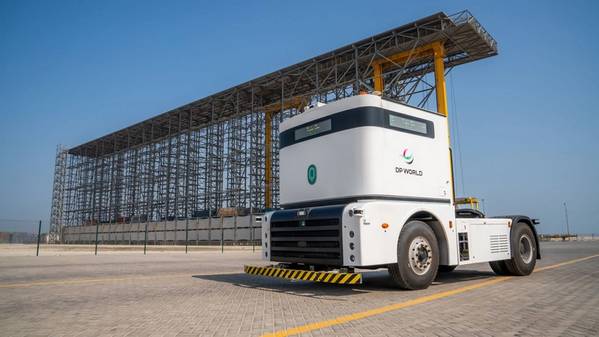
DP World recently opened its doors to students from the top universities in UAE and India to reimagine global supply chains and create new technology-driven solutions in its first-ever innovation challenge, THE BIG TECH PROJECT.
DP World challenged the university students to design and build prototypes of their proposed trade solutions, under the expert guidance of mentors from DP World’s Global Technology team. After receiving dozens of entries, four finalists have now been selected, with three from India and one from the UAE. They will be flown on an all-expenses paid trip to Dubai in November to present their solutions to DP World’s THE BIG TECH PROJECT jury.
The grand finale will take place at the end of November where the finalists will compete for DP World’s first-ever Student Innovators title. All finalists will be given guaranteed internships at DP World and Macbook laptops, while the winner and runner up will receive cash prizes as well.
“By digitizing a traditionally analogue industry, DP World aims to make trade smarter, to keep it flowing, increase visibility and minimize disruption. This is how trade networks fit for the future are built. Initiatives like THE BIG TECH PROJECT will help us accelerate this trend by tapping into the creativity of some of the brightest young minds in India and the UAE. I am excited to see the solutions these student innovators have devised to solve real world problems,” said DP World Group Chairman and Chief Executive Officer, Sultan Ahmed Bin Sulayem.
The four finalists are from [University/Solution]:
Mohamed bin Zayed University of Artificial Intelligence, Abu Dhabi, UAE
A 3D visual guidance equipment maintenance and inspection system for port terminal equipment.
International Institute of Information Technology (IIIT) Bangalore, India
Leveraging the metaverse to give students a real-time understanding of daily life in different careers, help them make informed decisions.
IIIT Bangalore, India
VR experience for Dragonmart where customers and wholesalers can benefit mutually.
IIT Kharagpur, India
Digital-twin solution to tackle harbour congestion, unpredictable demand and unreliable operations.
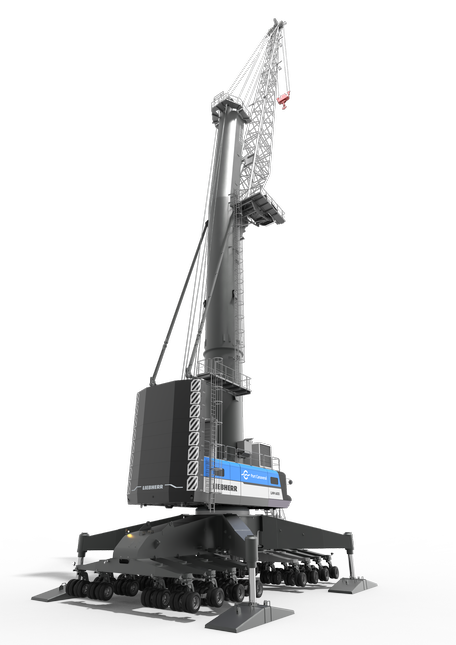
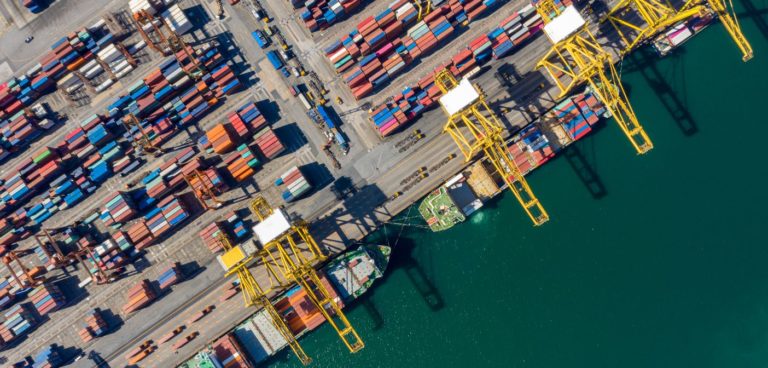
Port Canaveral has signed an agreement with the Liebherr Group to acquire another mobile harbor crane from the company to support the Port’s growing cargo operations. The 320-foot-tall Liebherr LMH 600 is the second mobile harbor crane to be deployed at Port Canaveral and is part of a new mobile harbor crane product line recently launched by Liebherr. The Port’s first, a Liebherr LMH 600, was entered into service in early 2019.
“This new mobile harbor crane is an important acquisition to enhance our abilities to accommodate an expanding portfolio of diverse cargo, especially at the pace we’re projecting in the coming year,” Port CEO Capt. John Murray explained. “This crane will have greater lift capability that will also meet the needs of the expanding commercial space enterprise in our region.”
In August, the Canaveral Port Authority Board of Commissioners approved the $7.4 million acquisition cost for the new crane, which will be offset by a $2.8 million grant from the Florida Department of Transportation. The new mobile harbor crane is expected to arrive at Port Canaveral in December 2023.
Built by German-based Liebherr Group, the LMH 600 is a 128-wheeled, 696-ton crane that will be 74-tons heavier than the Port’s current LMH 600. The new crane will have lift capability up to 154 tons and a jib length of 200 feet. Its 20-container reach will accommodate containers stacked nine high on deck – an upgraded handling capability from the previous model generation – and its undercarriage will have 32 axel sets compared to 26. A new crane control system, advanced sensor integration and digital information transmission can enable future assistance and partial automation systems.
No matter the industry, it is critical that sites operate safely, effectively and economically. To ensure this level of operation, processing facilities must know what is happening with machines and processes down to the device level. Plants can achieve this deep awareness by investing in technologies that provide the control and real-time diagnostic data needed to make educated and timely decisions. Smart valves and related pneumatic solutions are a few of these vital assets that monitor, measure and deliver data that can detect issues, save energy and help protect plants.
Once this valuable data is collected, connectivity guarantees that it is seamlessly linked to operational applications or appropriate experts. New designs and architectural approaches make it possible to securely export data to anyone, anywhere, with requisite permissions. Once intended users receive it, they can use a broad portfolio of scalable analytics, both on-premises and cloud-based, to leverage embedded expertise and human-centered dashboards. These tools generate new insights that can be delivered to the right person at the right time, wherever they are, to enable smart, fast and actionable decision-making.
Wireless networks make integration easy
Most end users include some wireless instrumentation in plant procedures, but they could quickly add more to improve operations, cut energy use and enhance safety. Industrial wireless networks and sensors can be used in a wide range of process measurements, usually offering dramatically lower costs compared to wired alternatives, with faster installation times and minimal disruption.
Using wireless technology on an electric actuator provides a simple method for harnessing diagnostic data stranded in these hard-to-reach valves, giving end users an effective means of delivering control commands, which are typically conveyed through wiring.
Wireless solutions connect valve actuators that are outside the end user’s main plant control infrastructure. The end user, applying wireless technology to gather data on hidden valves in their plant system, sends input control commands to valves, which are typically operated manually.
Also, utilizing wireless communication for control does not interfere with existing plant-wide systems. By using existing diagnostics available within the current plant control system, captured data from these stranded valves provide operators with information that can be used to prevent unplanned shutdowns.
The standards and infrastructure for the industrial internet of things (IIoT) are continually evolving, driven by programmable logic controller (PLC) manufacturers. A future-proof platform starts with embedded intelligence at the device level.
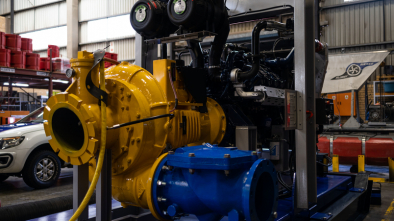
Pump specialist and local Sykes distributor Integrated Pump Rental is breaking new ground for customers in corrosive environments, offering a pump solution that is built entirely from stainless steel.
According to Steve du Toit, rental development manager at Integrated Pump Rental. while the pumps themselves or pump components are commonly available in stainless steel, the market has not yet made something like this readily available.
Integrated Pump Rental is producing complete stainless steel pump sets.
“Our focus on specific customer requirements, built to order in our modern workshop, has led us to develop a fully stainless steel solution – from the tank and skid to the lifting frame and other components,” says du Toit. “We have seen a definite interest in the market for this build design, as customers see the value in having this corrosion resistant material in all aspects of the pump set.”
He notes that the initial interest has come from the mining sector, where mine water being pumped is often acidic. However, he expects further interest from the chemical and process industries where corrosive liquids are pumped and stored.
“The design is based on our ‘total solution’ approach, where we consider the complete application and its challenges,” he says. “While the upfront cost of stainless steel is obviously higher, the value gained by the customer in terms of longevity and reliability far outweigh this.”
Integrated Pump Rental is offering a pump solution that is built entirely from stainless steel.
Among the applications is open pit dewatering where there are low pH levels in the water, as well as coastal applications where salt water and air cause rapid rusting of mild steel. Integrated Pump Rental has already successfully placed a stainless steel unit in a coastal application, where it is performing well.
“Different grades of stainless steel are used in the design, depending on which components have the most contact with the acidic medium,” he says. “A range of materials is therefore employed to suit each application, and to achieve optimal performance at the most competitive cost.”
This custom engineering is made possible by the company’s range of technical skills and specialist experience that resides in its people. This in-house expertise includes draughting, fabrication and pump assembly, making use of coded welders and qualified boilermakers. Depending on the application, the stainless steel build can be supplied on a road trailer or with a site trolley.
BMG’s extensive power transmission range encompasses HEKO conveyor components, including round link chains and components for submerged chain conveyors, which have been designed for dependable use in many harsh environments.
“High wear-resistant HEKO components for bulk material conveyors, which are manufactured in Germany to pristine quality standards, enhance BMG’s extensive range of chain products,” explains Gavin Kirstein, business unit manager, power transmission division, BMG. “Through the supply and support of HEKO products, BMG boosts its solutions service to its broad customer–base, by optimising the efficiency of bulk material conveyor systems.
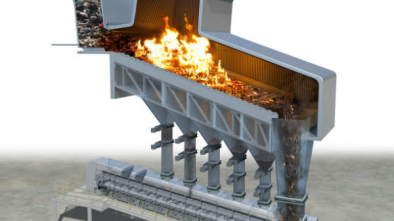
HEKO components for submerged chain conveyors to drain ash from a boiler discharge
“We recommend the use of submerged chain conveyors for our customers who work with coal, wood, refuse and scrubber sludge, to effectively collect, cool and drain bottom ash from a boiler discharge. These conveyors, which are fitted with secure releases,are designed to handle bottom ash efficiently and safely.
“Submerged chain conveyors are often installed for the transportation of slag granulated material, ash made of stone and brown coal firing, as well as metallurgical process residue or waste ash. Fluid slag or hot ash from melt firing is filled in a vessel with water for cooling and then transported via a chain conveyor from the vessel to an ash bunker.
HEKO chain strands are highly wear-resistant, case hardened and manufactured with low tolerances. Chain sprockets and chain rollers, with replaceable segments of teeth, are sealed for safe use under water.
HEKO’s pocket teeth chain wheels, with toothed rims, are manufactured from special alloy steels and designed for extended service life.
Chain contact surfaces are machined and the sides are chamfered to ensure a positive contact with the chain and a good lead into the wheel. Chain contact surfaces are hardened for long service life.
Pocket toothed chain wheels are supplied for use with special attachments – vertical shackle to DIN or TS-shackle and lift-in scraper bars. Replaceable rims have the advantage that the hub can be left in place during refurbishment, which saves maintenance time and reduces costs. Purchasing costs for replacements are also lower compared to the investment in completely new wheels. Dimensions for existing installations are tailored to suit every specific application.
HEKO support idling wheels and snub wheels are alternative solutions to guide rails for horizontal and inclined conveyors. The use of wheels reduces friction and thus power requirements.
HEKO components for submerged chain conveyors to drain ash from a boiler discharge
HEKO chain systems with attachments can be supplied pre-assembled (with the chain as endless round strands), thus eliminating the need for on-site assembly.Plug-in scraper attachments type SMO, enable fast connection to endless chain strands with chain locks, making reversible conveying possible.
Also in BMG’s range are round link chains, which have been developed by HEKO for bucket elevators and chain conveyors. These components are suitable for use in various sectors, including mining and quarrying, cement, chemical and incinerating plants, paper production, food and beverage, as well as artificial manure and general machine industries.”
HEKO chains – known globally for high fatigue strength and close length tolerance of chain pairs – are manufactured from durable materials, including manganese, chrome-nickel and fine grain chrome-nickel alloy steels. Advanced computer-controlled heat-treatment processes are employed to produce tempered or case-hardened chains.
Advantages of case-hardening include a high breaking load, resulting from a tough, fine grain core and high wear-resistance, from a minimum surface hardness of 800 HV. In addition to six standard hardening depths, BMG also offers HEKO products with hardening depths to suit specific requirements.
The HEKO range comprises round steel chains, bucket and scraper attachments, chain wheels, buckets and shafts, as well as complete return and tensioning units. Heat-resistant ring kiln chains for rotary kilns also form part of the range.
BMG’s national branch network offers a technical advisory service on correct chain selection, which is a critical factor in power transmission systems.
South African petrochemical companies appear to be forced to choose between meeting cleaner production standards and adopting technology that will keep them globally competitive.
Through the 1980s and 90s petrochemical companies were at the forefront of technological innovation, but they’ve found themselves trailing behind in the 21st century, with disruptive technologies like Artificial Intelligence (AI), Machine Learning (ML) and the Internet of Things (IoT) largely left unexplored.
The problem has been exacerbated by the COVID-19 pandemic. Last year was one of the most uncertain in the industry’s history, with fuel usage down because of people staying home during lockdown.
Now that lockdown restrictions are easing, the industry can find its competitive footing again, but the impetus should be on improvement, not stabilisation. Gartner’s report, Top 10 Trends Driving the Oil and Gas Industry in 2021, suggests that petrochemical industry CIOs will have to focus on three strategic business imperatives: optimising business performance; creating new business capabilities; and strengthening their technology foundation.
Catching up to global changes
Meanwhile, the South African Petroleum Industry Association (SAPIA) has warned that the country’s refinery capacity could become obsolete within two years. This is due to the Petroleum Products Specifications and Standards, gazetted in August 2021, which mandate the use of ultra-low-sulphur petrol and diesel products from 1 September 2023.
In January 2021, SAPIA warned that the financial impact of COVID-19 lockdowns made it unlikely that South African petrochemical companies would be able to afford refinery upgrades (which carry an estimated cost of $3.9 billion), unless the government allowed them to pass those costs on to consumers or offered some degree of financial support.
This stands in stark contrast to global industry buzz; Gartner’s report shows that 85% of oil and gas CIOs want to create a change-enabling technology platform and 79% want to enhance the culture of IT. This is a crucial element, as petrochemical companies largely continue to struggle with non-integrated data and substantial unresolved technology debt – obsolete technologies and solutions, in other words – which keep operating costs high and the rate of change too slow.
According to McKinsey, investing in digital technologies could save petrochemical companies as much as 20% on capital expenditure and 5% on upstream operating costs.
Smarter fuel
Artificial Intelligence plays a much larger role in daily life than many people realise, and its increased pervasiveness makes it a must-adopt for any enterprise. The petrochemical industry is no different and could benefit from the increasingly wide variety of extended computing capabilities AI offers.
AI can deliver massive additional value for businesses in areas such as knowledge extraction, exploitation and automation plus asset and business optimisation. Gartner’s survey showed that deployment of AI and ML had more than doubled (up from 13% to 32%) between 2018 and 2020, with 50% of companies planning to increase their investment in AI/ML in 2021.
Global bank Barclays estimates that the oil-focused, digital-services industry worldwide will grow 500% annually – from less than $5 billion today to more than $30 billion over the next five years in the upstream market alone. This could lead to $150 billion in annual savings for oil producers.
If South African petrochemical companies do not find a solution for the conversion conundrum, they will be forced to direct their spend towards meeting the new standards, while international companies put their money into state-of-the-art tech.
Bottom line? South Africa’s petrochemicals companies risk being left short in terms of global competitiveness if they cannot find a balance between keeping up with global technological advances and toeing the regulatory line back home.
The opinions and views expressed by the industry experts are their own and do not necessarily reflect those of Old Mutual.
Problematic solids such as sanitary towels, plastic bags, textiles and wood are being found more and more often in wastewater. Pumping and sewage treatment plants are therefore increasingly reaching their limits; units get clogged up and break down.
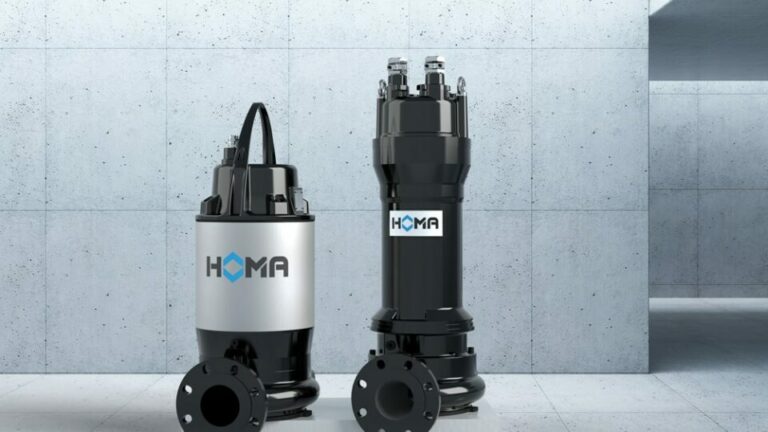
In times when low lifecycle costs are playing an ever more important role, HOMA Pumpenfabrik offers an energy efficient and reliable solution for areas where a high delivery head is required, but at the same time, a diverse range of solids is expected: the Alligator chopper pump series. The newly developed OC impeller of the Alligator series enables effective operation through a powerful cutter system. Thanks to the use of highly durable chilled chrome cast iron, the main components that are subject to the most stress perform reliably even with abrasive substances such as sand. HOMA will be presenting the new Alligator chopper pumps for the first time at IFAT 2022 in Munich.
“The lowest possible lifecycle costs are becoming increasingly important in water and wastewater applications,” explains Konstantin Pörsch, Project Manager in the Design & Development department at HOMA Pumpenfabrik GmbH. “There is a growing demand for energy saving and reliable pumps that reach high delivery heads with great efficiency.” With its new Alligator chopper pump series, which will also be available as an explosion-proof version, HOMA has developed a particularly efficient response to this demand.
Cutter system shreds all solids with high efficiency
“Our goal was to achieve high delivery pressures in the medium flow rate range,” reports Konstantin Pörsch. Without forfeiting pump rate, the improved efficiency meant that a smaller, cheaper and more energy saving motor than in other pumps in the same operating range was sufficient. To achieve this, HOMA developed a new cutter system that effectively shreds and removes large quantities of diverse solids such as tear-resistant hygiene wipes, plastic bags and wood, which also get into the wastewater via surface water. The specially designed impeller has integrated cutters and a sharp-edged radius of 10 mm to the wear plate, which is also equipped with its own cutter. This design allows the two central components to work together to catch solids, break them down and ultimately remove them from the suction area via integrated grooves in the wear plate.
To enable greater efficiency without compromising on cutting performance, the blades of the impeller also curve strongly backwards. As a result, in the 50 Hz version, a flow rate of up to 130 m³/h and a delivery head of up to 57 m can be achieved with power consumption of 5 to 12 kW. In the 60 Hz version, with power consumption of 8 to 20 kW, a flow rate of up to 140 m³/h and a delivery head of up to 82 m are possible. The suction cover mounted on the pump housing can also be used to adjust the cutting gap between the impeller and the wear plate with the aid of six set screws. “The strength of our new Alligator series, which is available for wet well installation as well as dry installation, is its great efficiency and effective cutter system, coupled with a long service life,” adds Konstantin Pörsch.
Low lifecycle costs thanks to wear-resistant design
In order to achieve not only the best possible efficiency values in the operating range required for these kinds of wastewater applications, but also to reduce lifecycle costs overall, HOMA attaches great importance to low-maintenance operation in addition to efficiency. The impeller and wear plate, which are the components subject to the most stress, are made of extremely durable chilled chrome cast iron, which withstands even abrasive substances such as sand in the pumped medium. In addition, the hydraulics were optimally designed for the operating range using computational fluid dynamics (CFD) to increase efficiency and to eliminate any possibility of solids building up, which can negatively impact performance and lead to costly pump failures. “With the newly developed cutter system, the Alligator pumps can effectively break down all solids in the waste water and transport them away, saving both energy and maintenance costs thanks to their high efficiency and wear-resistant materials,” Konstantin Pörsch sums up. “This makes them particularly suitable for waste water applications that require high delivery pressure, but at the same time have to deal with many different kinds of solids.”
HOMA will be presenting the new Alligator chopper pump series for the first time at IFAT 2022 in Munich. This and other innovations, such as the maintenance slide with sliding motor mount, will be explained and demonstrated by the HOMA sales team in Hall B1 at Stand 429/528.
Transportation solutions provider Logistics Plus has announced a new partnership with international skip brokerage firm The Odin Marine Group to provide supply chain and shipping solutions.
Dennis Melgert, Vice President of the Chemicals Division for Logistics Plus said: “Our new partnership with The Odin Marine Group will allow the two groups to leverage each other’s competitive and cultural strengths and provide new ideas, opportunities, and supply chain solutions to our customers with greater flexibility and access to all modalities”.
He continued: “Finding a partner who is a good cultural fit and has the same passion for excellence is key to this strategic partnership.”
The Odin Marine Group specialises in the transportation of bulk liquids including chemicals, alcohol products, and oils.
Richard Appell, Chief Executive and Managing Director of The Odin Marine Group said: “Finding a partner who is a good cultural fit and has the same passion for excellence is key to this strategic partnership. This new partnership will accelerate change in the marketplace.”
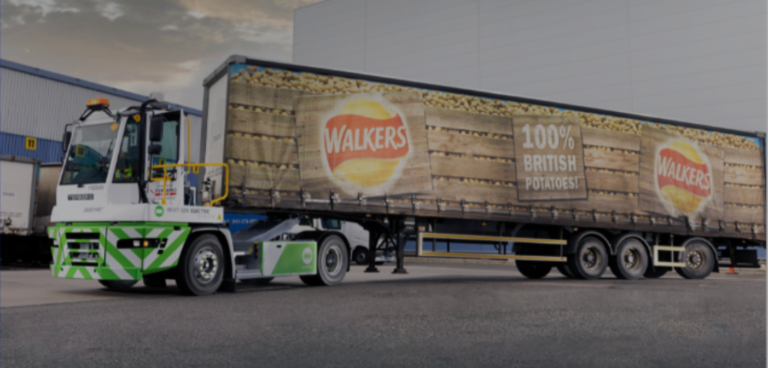
Pepsico UK has launched new green logistics initiatives, including the replacement of diesel with Hydrogenated Vegetable Fuel (HVO) in over 3,000 journeys per year.
Pepsico, a multinational conglomerate which owns brands including Pepsi, Doritos, and Quaker Oats, will begin using vegetable oil as a replacement for diesel in routes along its distribution network.
Trucks travelling between the Quaker Oat mill in Cupar, Scotland, and the Walkers headquarters in Leicester will now run using the more sustainable fuel option.
Pepsico claims that ‘every mile powered by HVO will have 80% less Greenhouse Gas emissions when compared with conventional diesel’.
Furthermore, the company is introducing more electric vehicles to distribute 40,000 pallets worth of goods.
Using sustainable fuel and electric vehicles contribute to Pepsico’s plans to reach net zero emissions by 2040.