spot_img

Zamboye mine disaster: When...

Zamboye mine disaster: When a closed mine keeps operating, who is responsible?

Weba Chute System’s grounded...

Across the global mining sector, Discrete Element Method (DEM) simulation has become a standard feature...

Kal Tire expands mining...

Kal Tire’s Mining Tire Group has signed an agreement with Transcale Pty Ltd.,...

One system, one supplier:...

ACTOM, South Africa’s largest manufacturer, repairer, and distributor of electromechanical equipment, has reaffirmed...
Home Blog Page 34

Toyota vehicle supply now restored, announces CFAO Motors Zambia

0

Supply of popular Hilux and Land Cruiser pick-ups and hard tops are now getting back to normal in Zambia following the devastating floods in South Africa earlier this year, as well as burdens of the global pandemic that halted production in both Japan and South Africa.

The first large-scale consignment of Hilux pick-ups arrived in the country last week, with more expected shortly, said Toyota distributor CFAO Motors Zambia.

There are currently 240 vehicles in stock, with a further 250 coming in November, both already purchased customers’ vehicles and vehicles for available to buy. The company now has stock of Hilux Double Cab, Hilux Single Cab, Land Cruiser 300, Land Cruiser 79 Double and Single Cab, as well as passenger cars including the Starlet, Belta and Rumion.

“There is much more to come. The supply issues are gone,” said CFAO Motors Zambia Chief Operating Officer Nenad Predrevac.

Toyota Motor Corporation and Toyota South Africa worked at full speed to get its Durban Plant back up and running after April’s floods, which badly affected Toyota’s global automotive supply. The 87-hectare plant produces vehicles such as the Hilux, Corolla Cross, Corolla Quest and Fortuner, with distribution sent to 74 countries around the world, Zambia being one of them.

“Our colleagues in South Africa worked round the clock to stabilize production, and we are now delighted to see production back on stream and supply coming into Zambia once again,” said Mr Predrevac.

“We thank our customers in Zambia for their patience and support during this difficult time and wish to reassure them that we are in constant communication with our production centre to ensure full availability,” added Mr. Predrevac.

To celebrate normalization of the supply chain, CFAO Motors Zambia is knocking off $5,000 for all new orders from the prices of Hilux Double Cab 2.4l, 4×4 MT Comfort Plus and Hilux 2.8l, 4×4 MT Executive from today until the end of the year.

Keeping Zambia’s Copperbelt moving

0

DSV moved 28 20-foot containers containing 78 500 bricks from Germany and Austria to the Copperbelt Province in Zambia – quite an achievement given the equipment shortages and port delays which characterize the global shipping market.

They were loaded in Germany and Austria at the end of May, shipped to Durban and arrived in port on 28 July and then driven to Zambia through South Africa and Zimbabwe in an impressive 28-vehicle convoy for delivery in time for the smelter shutdown on 15 August.

DSV’s DAS (DSV Africa Services) and DSV Zambia controlled the movements from the supplier on an ex-works basis to final delivery at the mine. The journey from Durban to the copper belt took 14 days and included the movement of cargo from port to warehouse, in-transit clearance, moving through various borders, customs clearance at the Chirundu border into Zambia, and onto final delivery to the site.

The shipment highlighted the high level of collaboration between DSV Zambia and DAS and demonstrated how DAS enables cargo movement into Sub-Saharan Africa and supports DSV’s African offices with effective service from end-to-end, and a clear understanding of challenges and risk mitigation to ensure efficient and effective movement of cargo.

Petregaz Expands Fleet of Tanker & Buys Onelogix Trucks

0

Petregaz, a subsidiary of the Petredec Group, has concluded an agreement to acquire the 35 LPG trucks and tankers and truck horses from OneLogix. The OneLogix Group will retain its other assets and businesses. The Sale Agreement is effective from 1 April 2023 with all suspensive conditions having already been met.

Through the acquisition of these assets, Petregaz will be able to expand its supply chain capabilities, provide primary logistics services to a larger client base and work closer with its existing and potential new key clients across the LPG industry.

Commenting on the acquisition, Managing Director at Petregaz, Matthew Costello said, “We are thrilled to have entered into this transaction. The addition of these assets to our business together with a focus on a high standard of service delivery will significantly enhance our logistical capabilities which are key to the reliable supply of LPG in Southern Africa. We will build on key focus areas including security of supply of LPG in Southern Africa as well as provide supply chain excellence to Petregaz’s valued existing and potential new clients.’’

The OneLogix Group is a niche logistics provider with over 30 years’ operational experience. The Group offers a range of world-class logistics solutions and related services to the Southern African region.

“OneLogix firmly believes that the sale of our LPG division to Petregaz will result in enhanced service delivery given Petregaz’s extensive experience, infrastructure and customer base. The transaction also reduces OneLogix’s risk profile following its recent delisting. We wish Petregaz well with its future expansion and development in the LPG industry,” concludes Cameron McCulloch, CEO of OneLogix.

Volvo Penta & CMB.TECH partner on dual-fuel hydrogen engines

0

Building on a successful collaboration, Volvo Penta has partnered with CMB.TECH to accelerate the development of dual-fuel hydrogen-powered solutions for both on-land and at-sea applications. The strengthened collaboration will include joint projects ranging from pilots to small-scale industrialization, providing increased access to this important technology for reducing greenhouse gas emissions.

CMB.TECH owns, operates, and designs large marine and industrial applications powered by hydrogen and ammonia – fuels that it both manufactures and supplies to its customers. Volvo Penta is a world-leading and global manufacturer of engines and complete power systems for boats, vessels, and industrial applications. The companies have worked together in pilot projects since 2017 successfully adapting Volvo Penta engines to run as a dual-fuel hydrogen and diesel solution via the conversion kit provided by CMB.TECH.

A low-carbon solution

The strengthened collaboration will create synergies aimed at leveraging the competences and product offerings of both companies – establishing dual-fuel hydrogen technology as a low-carbon interim solution before suitable zero-emissions alternatives become viable. It is an important step in Volvo Penta’s and CMB.TECH’s joint ambition is to help accelerate its customers’ transition to net-zero emissions.

The partnership will cover pilot projects and small-scale industrialization of a hydrogen dual-fuel solution for selected customers.

“From the initial dual-fuel technology projects we have seen reductions of CO2 emissions up to 80%,” says Roy Campe, Chief Technology Officer at CMB.TECH continues: “It is clear that the energy transition is a major challenge in many types of applications. With the dual-fuel technology we have been developing over the last few years, we can provide a cost-effective and robust solution for a variety of applications. We think there is huge potential in this solution for customers, both on land and at sea.”

The whole Volvo Group is working intensively to explore solutions to reduce – and ultimately eliminate – greenhouse gas emissions. Volvo Penta strives to team up with suppliers, partners, and customers to accelerate the journey into fossil-free fuels for both on-land and at-sea applications.

“The development in this area is moving fast and with this partnership, we see a great opportunity to further explore and be part of increasing the use and availability of hydrogen solutions. I believe that this dual-fuel approach will appeal to many of our customers by its ease of installation, maintenance, and use. In addition, it will help accelerate our customers’ transition to more sustainable operations,” said Heléne Mellquist, President of Volvo Penta.

Dual-fuel technology

The dual-fuel solution’s main advantage is that it will reduce the emissions of greenhouse gases while at the same time providing a robust and reliable solution. And, if hydrogen is not available, the application continues to run on traditional fuel, safeguarding productivity.

The design and testing of the hydrogen-injection system will take place at CMB.TECH’s Technology and Development Centre in Brentwood, UK. Here, Volvo Penta engines will be tested to optimize the hydrogen-diesel injection strategy for maximum reliability and emission savings.

“The simplicity of the dual fuel technology allows a quick introduction into many applications. The potential to decarbonize with green hydrogen is huge, but many applications require a fallback scenario of traditional fuel to maintain a viable business. With the dual fuel technology, your asset is future-proof, even without full coverage of a reliable hydrogen infrastructure today,” said Roy Campe, Chief Technology Officer of CMB.TECH.

“This solution is a valuable tool to have on our way to reaching our ambitious commitment to the Science Based Targets initiative where we aim to reach net-zero value chain emissions by 2040,” concludes Heléne. “There is no ‘one-solution-fits-all’ answer, which is why Volvo Penta is investing heavily in exploring a wide range of sustainable and bridging technologies – such as hybridization, electric drivelines, fuel cells, and alternative fuels for combustion engines – allowing customers to find the technology that works best for their application.”

Zambia plans to unlock transport corridors potential

0

Zambia intends to utilise its central geographic location in the Southern African Development Community (SADC) to unlock its potential as a key transport corridor.

According to Minister of Transport and Logistics, Frank Tayali the region presents an opportunity for the country to be exposed to multiple import and export trade and transport corridors.

Tayali made the remarks while attending the 2023 World Bank Group-International Monetary Fund Spring Meetings in Washington, D.C., USA.

He said the transport corridors that Zambia has among them; Dar-es-Salaam Corridor linking the Democratic Republic of Congo and Zambia’s Copperbelt Province, the North South Corridor linking Durban with DRC/Zambia via Zimbabwe and Botswana with a spur into Malawi via Harare, the Lobito Corridor connecting Zambia to the Democratic Republic of Congo and the Republic of Angola to the Port of Lobito on the Atlantic Ocean for Western import and export markets in the United States of America and Europe.

“The Nacala Corridor linking Zambia and Malawi to the Nacala Part in Mozambiaque which is one of the deepest port in SADC; The Beira Corridor linking large parts of Zambia, Malawi, Zimbabwe and Mozambique to the port of Beira on the Indian Ocean; and the Walvis Bay Ndola Lubumbashi Development Corridor (WBNLDC) links the Port of Walvis Bay with Zambia, the Democratic Republic of Congo and Zimbabwe.

“This route links Zambia to strategic outlet to export markets and offers a key route to the sea port on the Atlantic Ocean linking the mining companies on the Copperbelt and Northwestern Provinces of Zambia to the Western markets in the United States of America and Europe,” said Tayali, attending an event under the banner: ‘Unlocking Financing Opportunities and Development Potential of Key Corridors in Africa.

He said economic and transport corridors are critical for the development of nations.

“This is especially the case for land locked countries that need to access inputs for production or regional and global markets.”

The Minister further told the meeting that countries need to start engaging to actualize the benefits of the corridors.

“Countries need to start engaging more and more. For Zambia, President Hichilema has continued to promote economic diplomacy. During his last visit to Mozambique, the two countries announced that they will start having direct flights from Mozambique to Lusaka, Zambia. This is what we need. We need to actualize these corridors,” he said.

Tayali said there is a need to unlock the capital needed to realize the full development potential of key corridors as important trade routes for both economic growth and food security in Southern Africa.

Mining sector surge and infrastructure development drive increase in logistics in Zambia

0

Logistics volumes into and out of Zambia have grown consistently over the last ten years, with the bulk of cargo movement being driven by capital expenditure projects for mines, growing mining sector activity leading to increased distribution to key markets such as India and China, and infrastructure development.

However, DSV Zambia MD Kris van Heerden said despite the infrastructure improvements, the road and rail infrastructure could not meet existing demand let alone forecast growth – and this hinted at the opportunities in the country once infrastructure matched economic potential.

Transport’s contribution to GDP has grown, if unevenly, over the last ten years shows, as the graph below shows, and it reached a high of 1678.50 ZMW (Zambian Kwacha) in the third quarter of 2021, before falling to 1459 ZMW Million in the fourth quarter of 2021 – but still recording the highest fourth quarter of the decade.

The rising price of copper over the past 18 months and the relaxing of tax liabilities by government for mines had positively impacted mining production and led to increased exports. “At the same time, mines were investing in increasing production capacity, and this automatically impacted on inbound cargo flow within Zambia for capex investments of the mines.”

Van Heerden pointed to First Quantum Minerals, which was investing US$1.2 billion to boost productions of copper and nickel for export, as evidence of growing investor confidence in the country’s mining sector and positive reaction to the government’s Economy Recovery Programme.

The Zambian economy was projected to grow 2.0% in 2022, underpinned by recovery in the mining, tourism, and manufacturing sectors, all of which are fueling demand for logistics services.  Van Heerden said DSV Zambia was active in the Automotive, healthcare and Pharma, Energy and Mining + Projects verticals.

Van Heerden said there had been improvements in many parts of the country and government had both recognized the importance of the transport sector to the economy and was committed to entering public private partnerships as a route to maintaining and constructing transport infrastructure.

Both Kenneth Kaunda and Simon Mwansa Kapwepwe International airports were upgraded to international standards in 2021, and there have been improvements to both road and rail networks.

The Lusaka Decongest Project, which included construction, rehabilitation, and expansion of roads, has reduced travel times in the capital.

“Importantly, the recently opened 923-meter Kazungula bridge linking Botswana and Zambia over the Zambesi River, along with one-stop border posts on each side, has made regional trade that much easier, providing alternative routes for SADC movements into, out of and through Zambia.  Roads were being rehabilitated and upgraded and new roads built to improve trade corridors between mines, cities, towns and rural areas and neighboring countries”, he said.

In addition to this infrastructure development, the Zambia Revenue Authority (ZRA) had introduced, including the two international airports, and the Kitwe, Chirundu, Kazungula, Nakonde and Katimo border posts.

The implementation of compulsory pre-clearance at all the borders has ensured that goods move seamlessly into Zambia.

The Zambia Revenue Authority has also introduced the Customs Accredited Client Programme (CACP) which facilitates almost “risk free” movement into Zambia once clients have been fully audited and accredited by the ZRA.

DSV Zambia is part of DSV – Global Transport and Logistics, which manages supply chain solutions for companies from 90 countries and has been operating in Zambia for 30 years.

South Africa leads peers in Global Logistics Performance Index

0

The latest global Logistics Performance Index (LPI) released by the World Bank has rated South Africa, Egypt, Benin, Botswana, Namibia, Djibouti and Rwanda better than Nigeria

The LPI is an interactive bench-marking tool created to help countries identify the challenges and opportunities on trade logistics, including shipping and what they can do to improve their performance.

The LPI report, titled “Connecting to Compete 2023: Trade Logistics in an Uncertain Global Economy,” provides a measure of countries’ ability to move goods across borders with speed and reliability, the report is coming after three years of unprecedented supply chain disruptions during the COVID-19 pandemic, with soaring delivery times.

The LPI 2023 report revealed that end-to-end supply chain digitalisation, especially in emerging economies, is allowing countries to shorten port delays by up to 70 per cent compared to those in developed countries. Moreover, demand for green logistics is rising, with 75 percent of shippers looking for environmentally friendly options when exporting to high-income countries.

However, the report also noted that most time is spent in shipping, adding that the biggest delays occur at seaports, airports, and multimodal facilities.

It pointed out that policies targeting these facilities can help improve reliability, including improving clearance processes and investing in infrastructure, adopting digital technologies, and incentivising environmentally sustainable logistics by shifting to less carbon-intensive freight modes and more energy-efficient warehousing.

On average across all potential trade routes, 44 days elapse from the time a container enters the port of the exporting country until it leaves the destination port, with a standard deviation of 10.5 days.

That span represents 60 per cent of the time it takes to trade goods internationally.

The LPI report provides valuable information for policymakers and stakeholders involved in the logistics industry. It helps identify areas where countries can improve their logistics performance, thereby enhancing their competitiveness in the global marketplace.

Covering 139 countries, the LPI measured the ease of establishing reliable supply chain connections and the structural factors that make it possible, such as the quality of logistics services, trade, transport-related infrastructure, and border controls.

The report, which is based on a maximum score of 5.0, adjudged South Africa as the best in Africa and 19th in the world with a score of 3.4 per cent, followed by Botswana and Egypt which scored 3.1 per cent each to place a joint 57th position globally.

Giving an insight into the report, the World Bank revealed that the survey was conducted between September 6 and November 5, 2022 and contains 4,090 country assessments by 652 logistics professionals in 115 countries across all World Bank regions.


Zimbabwe: FX Logistics adds to cold chain capabilities ahead of the 2022 export season

0

FX Logistics, the leading perishable logistics operator in Zimbabwe, has commissioned an extension to its Europort Cold Storage Facility (based on Harare’s RGM International Airport) providing the hortiexport industry in Zimbabwe with access to a purpose-built ocean freight handling facility.

This investment was made in anticipation of growth in demand for ocean freight capabilities for blueberries and other horti crops and has been designed to exceed the exacting cold chain demands for highly perishable cargo moving by ocean.

FX Logistics now has the capability to load out six sea freight reefer containers per day, with this capability up and running ahead of the 2022 ocean freight season.

Europort now boasts a total cold store capacity of 4,600 square metres, offering four dedicated controlled temperature rooms, seven forced air cooling stations and two vacuum coolers.

Allied to its range of air, road and ocean forwarding products – offered in conjunction with network partners at Airflo, Tiger Freight and Go Reefers – FX Logistics can provide a full range of cold chain logistics solutions for Zimbabwean exporters to worldwide destinations.

Rob Killick, FX General Manager and Director, comments that “this development further underscores our efforts to bring a world class perishable freight forwarding solution to our clients. We look forward to next year’s ocean freight season.”

Unlocking the power of data to drive sustainability in the mining sector

Seequent’s cloud-based geological data management platform is the latest offering in its suite of solutions designed to enable miners to unlock meaningful value from their data

Momentum towards a just energy transition and the objective of achieving net-zero by 2050 is in full swing, but explorers and miners are under no illusion about how challenging this will be. However, many mining companies are proudly rising to the challenge, setting themselves ambitious targets.

Looking at the task in totality, the mountain seems incredibly steep but the push for a green, sustainable future coincides with one of the most exciting phases of the fourth industrial revolution. Technology is an enabler, and miners and explorers are building their digital transformation roadmaps towards achieving their ambitious net-zero targets.

This is how Seequent, the Bentley Subsurface company, fits into the picture.

Rob Ferguson, Segment Director Exploration and Resource Management at Seequent, says that developing tools and technologies that can minimise the amount of travel, energy usage and infrastructure required at an exploration site will go a long way towards reducing the human footprint and towards better ESG governance.
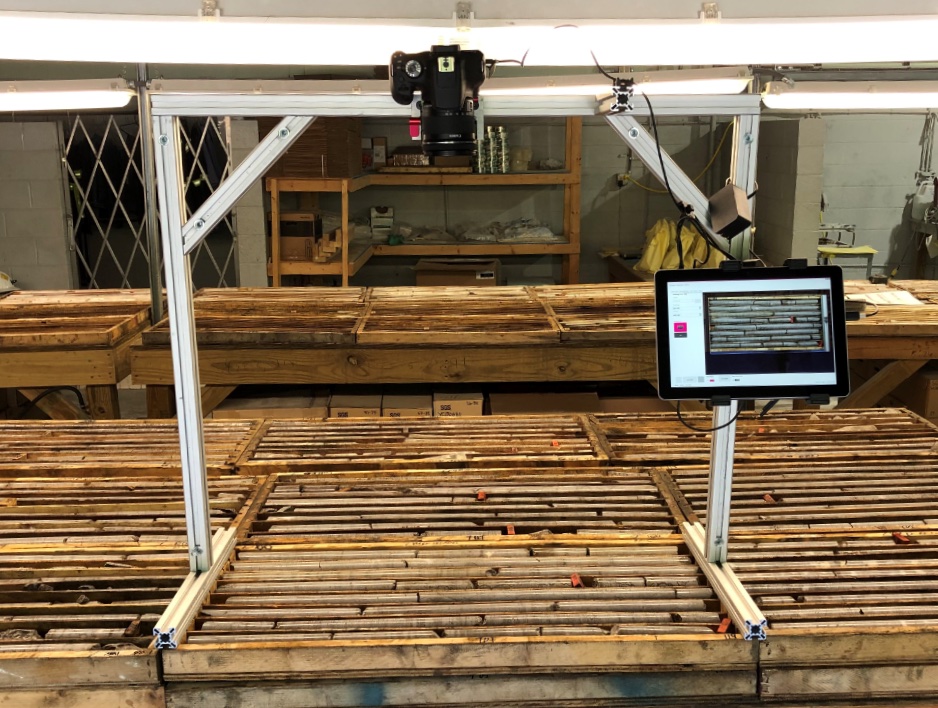
Seequent’s exploration suite of solutions, which include MX Deposit, Leapfrog, Central and Imago, has been designed to enable mining teams to collaborate and work with higher volumes of data.

A deep and thorough understanding of geology is crucial to exploration and every step along the exploration mining journey. This is even more relevant today where all projects must not only prove viability but also be undertaken with sustainability front and centre.

Any organisation that has embarked on any leg of this journey intrinsically understands the difficulty posed by trying to build a comprehensive picture of the geology. Projects are complex and multi-layered and require a team effort of experts from an array of different disciplines, working on and deriving insights from the same, reliable source. Ensuring all data, both raw and interpreted, is kept in a single, centralised and secure location greatly reduces the risk of a breach, but also makes it more accessible and easy to use.

Let’s take a closer look at the data used to understand geology. When photographs of primary data like core and chips were first taken they served the role of a de facto insurance against loss. As core deteriorates, quality photographs serve to preserve the original insights that were made when drilling first began.

Until now, the handling and storage of these highly valuable geoscientific images was somewhat haphazard. Those with experience spanning years will recall the difficulty in not only locating images, but also immense challenges in navigating through reams of images that were difficult to maintain and, importantly, share.

One would find geologists in the field copying and pasting images to laptops that they would then transport to important meetings. If these images were not the right ones, or slightly different or nuanced questions were asked, they’d either be left with what they had, or the haphazard task of trying to locate what was needed.

There’s no substitute for valuable insights gained from the right data, and so, in the modern, digital world, the question simply must be asked: how has technology enabled this entire process to become streamlined, tidy and organised, with easy-to-access images that can be shared anywhere in the world? More importantly, how is technology an enabler of all this while helping companies directly reduce their carbon footprint?

With data that’s instantly available, fewer geologists need to visit an exploration site, less often, and decisions can be made remotely to support an optimised drill programme.

Cloud technology and connected, collaborative tools enable companies to make decisions faster and in real-time, simplifying the exploration process and further reducing the environmental impact.

“The more holistic conceptual geological models are, the better-targeted drilling can be, helping to reduce costs and aid sustainability – which is what companies are looking for,” says Ferguson.

Zooming into exploration more closely, drill samples are the basis of resource and reserve estimates, but obtaining and storing core samples is expensive. Image data is an increasingly important source of data across the geosciences—and can come from potentially any source, including core photos, hyperspectral, aerial photos, drones, and handheld devices.

But that’s just the start, and so let’s dig a little deeper. Image quality is crucial. If a photograph was taken poorly, how can geoscientists and decision makers know for sure what they are looking at? We all know that instead of heading back and doing the expensive exercise again, technology can improve image quality. That’s a positive, but it is also only the first step. Cataloguing images is crucial. Done manually, this is long and tedious and open to error. And so, again, this can be automated but then how does an organisation connect this catalogue to other processes such as 3D modelling for better decision-making?

Mining and exploration is no different from other industries in at least one important aspect. As technology improves, and devices that produce invaluable data become more widespread and affordable, the amount of data being generated has skyrocketed. However, there’s no use in data for data’s sake. It needs to be stored, ordered and managed if it is to live up to its promise of streamlining and improving businesses generally, and mining and exploration projects specifically.

What is Imago?

Imago is a cloud-based geological data management software which has been designed with every step of this journey integral to its DNA. It extracts the most value from a mine’s core and chip photography with the objective of supporting every step of the geological process from exploration to grade control.

Imago represents an important step in the evolution of the industry to a data and insights-driven sector that not only provides the best possible image insights for companies but enables faster, better decision making. It enables exploration project teams and miners to access the details they need instantly, and from anywhere, from a well-organised database.

Perhaps one of the most compelling design elements is the ease with which it migrates a company’s historic images into a single-source-of-the-truth library, before supporting teams to capture the highest quality future images. This is important, because with digital transformation front and centre, it ensures a database is aligned for machine learning and artificial intelligence analysis when the opportunity arises.

Ferguson explains that “Imago was founded to help exploration and mining companies manage the high volume and size of geoscientific images to unlock value, in contrast to other providers who focused on including proprietary hardware as part of their product offering.”

With this in mind it is hardly surprising that Imago is an agnostic solution in both hardware and integration. This is important as it allows explorers and miners to integrate the software with other geological data and modelling tools such as Leapfrog, MX Deposit, Oasis montaj and Target.

Federico Arboleda, Imago’s founder and Director, Imago Sales, explains that companies can export image textured meshes inside their modelling tools, view core trays or linearised downhole images alongside drillhouses, and then quickly zoom in and out of a particular depth at the speed of Google maps.

“This instant, fast access to images brings rich information to support interpretation and 3D modelling – an integration that avoids floundering around trying to use files to integrate with modelling packages,” he adds.

Imago’s open API ensures companies own the data, can access it where and how they like and it also means it is simple to add new integrations.

“Recognising the importance of this openness and interoperability is a driving force for innovation at Seequent. We see the opportunity to integrate Imago further into other industries, such as civil and energy, to help geoscientists and engineers solve more of their earth, environment, and energy challenges,” says Ferguson.

Imago’s capture software can be enormously valuable in guaranteeing that an organisation’s core photographs, or other geological images, are always to a standardised high quality, named consistently, and catalogued and categorised correctly before being automatically uploaded to the organisation’s centralised Imago Portal.

Seequent has a special relationship with Africa and the mining community. The company gained its first major mining customers when it introduced its revolutionary Leapfrog software more than 15 years ago – enabling geological modelling in hours, not days.

Seequent has continued to invest in innovation to expand its portfolio and cloud capabilities, reinforcing its position as a trusted partner in the mining industry. Its growing presence in Africa includes local teams in South Africa, Mali, Ivory Coast and Ghana, supported by its global team.

Cobre and Sandfire kick off joint airborne surveys over Kalahari copper belt projects

Cobre Ltd has kicked off a collaborative airborne gravity gradient (AGG) survey with neighbour Sandfire Resources, covering a large portion of the Kalahari Copper Belt (KCB), including Cobre’s Ngami Copper Project, Kitlanya West and Kitlanya East (KITE) Projects.

Notably, the results are expected to provide valuable information on KCB basin architecture and the location of sub-basins, margins and controlling structures where copper-silver mineralisation may be targeted.

The survey will complement results from the recently completed 5,000-metre diamond drilling, ongoing soil sampling, and aircore and reverse circulation drill programs, providing valuable additional data for area and target prioritisation at Kitlanya West and Ngami Projects.

Furthermore, AGG results may also help in the detection of copper-silver bearing trap sites analogous to Sandfire’s neighbouring T3 and A4 deposits at KITE, providing new targets for drill testing.

Significant insights

Cobre CEO Adam Wooldridge said: “We are pleased to announce that the AGG survey, in collaboration with Sandfire, is finally underway. These results are expected to provide significant insights into our understanding of the regional controls for copper distribution in the KCB.

“They will also provide a new targeting tool to complement our other datasets. The deliverables from this survey are expected to be highly complementary to the results from our ongoing aircore, reverse circulation drilling and soil sampling programs at KITW as well as providing further context for the distribution of copper-silver grades at NCP.

“Additionally, the results over the KITE project will be particularly interesting given its proximity to the T3 deposit and potential for hosting similar styles of deposit.”

Survey background

Gravity data is routinely used for mapping sedimentary basins where it provides a cost-effective method for modelling the basin architecture, often key to understanding the distribution of sedimentary copper deposits.

This is demonstrated in the historical regional ground gravity data over the north-eastern portion of the KCB where correlations are evident between the margins of gravity lows and known copper-silver deposits.

The higher resolution AGG is expected to build on these correlations, identifying further priority sites for copper-silver deposits as well as providing important structural information and potentially identifying trap-site targets where mineralisation may be economically upgraded.