spot_img

Zamboye mine disaster: When...

Zamboye mine disaster: When a closed mine keeps operating, who is responsible?

Weba Chute System’s grounded...

Across the global mining sector, Discrete Element Method (DEM) simulation has become a standard feature...

Kal Tire expands mining...

Kal Tire’s Mining Tire Group has signed an agreement with Transcale Pty Ltd.,...

One system, one supplier:...

ACTOM, South Africa’s largest manufacturer, repairer, and distributor of electromechanical equipment, has reaffirmed...
Home Blog Page 36

GATI Express Business FY23 EBITDA Doubled Over FY22

Gati Limited (GATI) one of India’s leading premier Express Distribution and Supply Chain Management company, has reported its unaudited financial results for the quarter ended March 31, 2023.

Financial Highlights for Express Business – Q4FY23 & FY23

Particulars (in ₹ Crs) Q4FY23 Q4FY22 Y-o-Y FY23 FY22 Y-o-Y
Revenue 356 320 11% 1,469 1,242 18%
EBITDA 12 4 200% 72 36 103%
Profit Before Tax (PBT)* -10 -6 NM 2 -8 NM

*pre-exceptions

For Q4FY23, Fuel stations revenue grew by 8.7% Y-o-Y, for FY23 the growth stood at 11.5% Y-o-Y.

Commenting on the results Mr. Pirojshaw (Phil) Sarkari, Chief Executive Officer of Gati Limited said:

“The company has recorded a revenue of ₹1,469 Crores in FY23 for the express business, witnessing a growth of 18% as compared to the last year. This performance reflects company’s focus on volume growth and operational efficiency. The year saw Gati launching its mega surface transhipment hub at Bhiwandi (Mumbai), in addition to hubs at Nagpur and Guwahati. The Mumbai hub is spread over 1.15 lac square feet with 61 bays and dock leveler. We also saw 100% implementation of digital e-dockets for retail clients and have started a pilot for MSMEs. The gross margin expansion remains on track, witnessing an improvement of 133bps over last year. In the next phase of infrastructure development, we’ll be setting up four surface transhipment hubs in Bengaluru, Hyderabad, Indore and Kolkata.”  

The quarter gone by saw weakness in initial months followed by a very strong March. However, overall weakness in consumer durables and automobile sector, notwithstanding the unseasonal rains dampened the sentiment a bit. Despite tough economic scenario, the company has been able to maintain its performance.  Our strategy for delivering such performance remains consistent and relies on our pillars of digitalization, sales acceleration, infrastructure, and operational excellence. We mandated GPS in all Linehaul & Feeder vehicles, to enhance visibility, improve performance & optimized productivity via continuous monitoring. The Company also improvised on dashboard designs to enable real time data visibility and KPI monitoring. Gati aims to enhance customer experience and operational excellence on front-end digitalization that include CRM system for managing customer relationships, sales acceleration with cluster-based approach, data science and digital payments.

We anticipate improvement in our performance in the coming quarters as we continue our journey of customer acquisition and infrastructure amplification. The management aims to launch five more hubs in the coming years that will help improve volumes through enhanced automation, better load factor and productivity per head. We also remain committed to our ESG journey and aim to convert entire delivery fleet to electric vehicles/alternate fuel by 2025. During the year, we achieved the milestone of plying 100+ electric vehicles (EVs) across India. We also signed an MOU with Gentari Mobility (Petronas Group) for 500 EVs under VaaS (Vehicle as a Service) model.

India’s First Elevated Expressway

Union Minister for Road Transport and Highways Nitin Gadkari on Thursday inspected country’s first elevated highway from an interchange of the Dwarka Expressway near Khedki Daula Toll in Gurugram to Dwarka in New Delhi.

Gadkari was accompanied by Union Minister of State for Statistics and Programme Implementation and Planning (Independent Charge) and Gurugram MP Rao Inderjit Singh; Union Minister of State for Road Transport and Highways and Civil Aviation VK Singh; and Delhi Lieutenant Governor VK Saxena. Delhi MPs Parvesh Verma and Ramesh Vidhuri were also present.

“With the commencement of this expressway, the connectivity between Gurugram and Delhi’s IGI Airport will be improved, as well as the project will have four categories of road transport, which are tunnels, underpasses, flyovers and flyovers overpass. The length of this road is 18.9 km in Haryana region and 10.1 km in Delhi region,” Gadkari said.

Rao Inderjit Singh said this is a big gift of the government for the residents of Gurugram.

“With the opening of this expressway, the road infrastructure will get a new expansion not only in Gurugram but also in the NCR region. The people living in the new sectors of this area will also be benefitted,” Singh said.

The construction of the Dwarka Expressway is in progress in four sections. The first section is in Delhi region from Shiv Murti in Mahipalpur to Bijwasan (5.9 km), the second is from Bijwasan Railway Over Bridge (ROB) to Delhi-Haryana border in Gurugram (4.2 km), the third in the Haryana region from Delhi-Haryana border to Basai ROB (10.2 km) and Fourth is from Basai ROB to Khedki Daula (cloverleaf interchange) (8.7 km).

Around Rs 2,507 crore will be spent on the construction of the first section in Delhi, Rs 2,068 crore on the section, Rs 2,228 crore on the third in the Haryana region, and Rs 1,859 crore on the construction of the fourth section.

61 per cent of the first section in the Delhi region, 82 per cent of the second, 94 per cent of the third, and 99 per cent of the fourth section in the Haryana border have been completed. The work in both the sections of Haryana region will be completed by next month.

Eight-lane access-controlled Dwarka Expressway is being built at a cost of about Rs 9000 crore.

There is also an eight-lane 34-meter wide elevated road on a single pillar of nine kilometers in length, which is the first elevated road of its kind in the country. In Haryana, this expressway will meet at Pataudi Road (State Highway-26) near Harsaru and Farukhnagar (State Highway-15A) near Basai. Apart from this, it will also cross the Delhi-Rewari rail line near Sector-88 (B) of Gurugram and Bharthal. The expressway will also connect Sector-88, 83, 84, 99, and 113 to Dwarka Sector-21 along with the proposed Global City in the Gurugram district.

ONE Adds New Call At Hazira Port To AIM Service

Ocean Network Express (ONE) announced that AIM weekly service will change its port rotation, by adding Hazira call.

The new rotation will take effect as from Bea Schulte, arriving in Hazira on 14 June 2023.

The current port rotation is,

JEA – MUN – NSA – CMB -DUR – TEM – TIN – APP – DUR – JEA

The new port rotation will be as follows,

JEA – MUN – HZA – NSA – CMB – DUR – TEM – TIN – APP- DUR – JEA

By the change, ONE aims to provide more option of INDIA ports to customers for smooth and better transport solution.

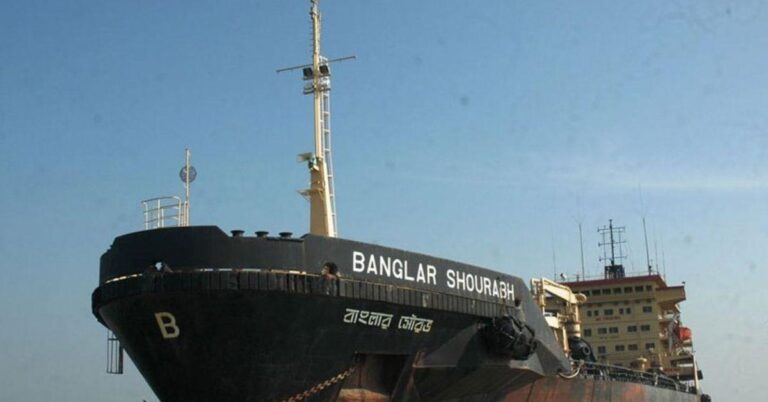
Bangladesh Shipping Corporation’s Efforts To Acquire Ships Await Funding

A shipping corporation effort to buy six container vessels is gathering dust as the relevant government authorities are not clearing a loan proposal to fund the procurement, according to officials.

To this end, the Bangladesh Shipping Corporation (BSC) signed a memorandum of understanding with AIS Marine and Offshore Pty Ltd last September.

Under the agreement, the Australia company was supposed to assist the corporation in finding loans to buy the proposed box ships.

AIS Marine made two proposals for the BSC. It proposed a $300-million loan at 0.55-per cent interest rate with a three-year grace period and loan repayment in 25 years.

In another proposal, AIS Marine said it would bring an AAA-category international financial institution to which the BSC will sign a loan deal at a market rate after negotiations.

In this case, the BSC needs to arrange a sovereign guarantee from the government against the loan.

With the proposals in hand, the BSC early this year sought permissions from Economic Relations Division (ERD) and Finance Division, under the Ministry of Finance, before advancing to secure loan.

However, neither the ERD nor the Finance Division has so far responded to the BSC’s plea, according to officials concerned.

Contacted, a Finance Division official told the FE that the first proposal for a loan at 0.55 per cent rate of interest “is not a realistic proposal”.

Even no bilateral or multilateral development partner provides a loan at such a low interest rate in this current world economic situation, he said.

On another proposal, according to the official, if the BSC takes a loan at a market rate, the interest rate will be high.

Moreover, if a sovereign guarantee is made obligatory, the “loan responsibility will ultimately fall on Finance Division,” he said.

The Finance Division official said securing a loan for a government entity is a job of the ERD.

A government entity can go for suppliers’ credit only after failing to secure a soft loan through the ERD.

Then it will try to implement a project from its own funds. If it has no funds, it will seek cash from the government.

The official suggested that the BSC secure the ERD’s opinion prior to sending a proposal to the Finance Division.

Contacted, BSC managing director Cdre Ziaul Hoque told the FE that the loan proposal was soft in nature that could have facilitated the BSC to buy container ships.

Nearly eight months have already elapsed since the BSC received the proposal and its seeking of opinion from the ministries and divisions concerned.

The ERD is not providing clearance to go ahead with the loan proposal, Mr Hoque said.

“The ERD is not considering it as a soft loan, though I’m in doubt whether Bangladesh has so far secured any further softer loan in the past.”

“The ERD said it needs to examine whether the BSC adequately tried to secure soft loan and only after that they can give opinion,” cited Mr Hoque.

The BSC has been waiting for the last four months for the ERD’s opinion.

When asked, an ERD official did not comment on this issue.

The BSC has a very small fleet of eight vessels, mainly bulk carriers, and oil and chemical tankers, but no container vessel.

It plans to launch a container feeder service, short sea service and even a main line vessel service by securing vessels.

Rotork assists BAE Systems in naval base actuator upgrades

0

Rotork has been working with BAE Systems to upgrade a series of A-range actuators to IQ3 actuators which operate penstocks controlling movement of ships between the sea and transitional locks and dry docks at Her Majesty’s Naval Base Portsmouth (HMNB Portsmouth).

A series of A-range actuators had reached the end of their operational life after long service in a challenging environment. BAE Systems wanted to retain all the benefits of electric actuators, so IQ3 actuators were chosen. These had to be specially adapted by Rotork to overcome problems around confined spaces and difficult access.

IQ3 actuators and IS gearboxes were mechanically adapted so that both actuator and gearbox could be manually operated without entering the confined space. Rotork designed special hand auto levers and through drive mechanisms for the actuator and gearbox to eliminate the need for confined space access.

Actuators within the IQ range are watertight, offering ingress protection to IP66/68 at 20 m for 10 days. They have an advanced dual stacked display with configurable data logger functionality, and an absolute position sensor provides reliability and accuracy

Burckhardt Compression to service Sero pumps in marine sector

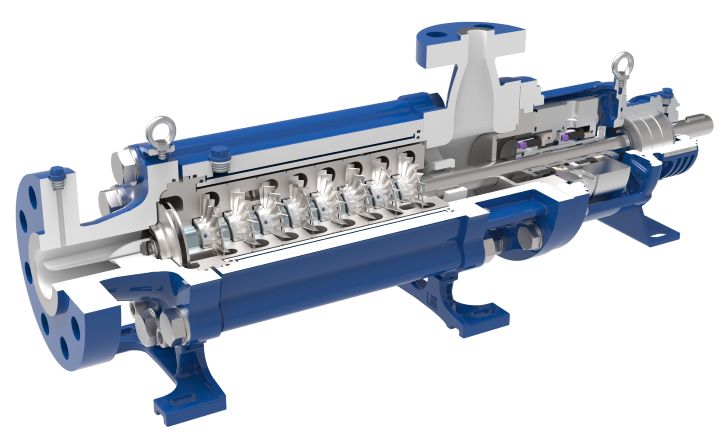
Burckhardt Compression is taking over all service activities for Sero PumpSystems’ SHP pumps in marine applications.

The SHP pumps are used on LPG tankers with dual fuel engines.

Burckhardt Compression already has a service infrastructure for its gas compressors in the marine sector with a worldwide network of more than 300 field service staff and representatives in more than 80 countries.

Beate Zientek-Strietz, managing director of Sero PumpSystems, said: “With this cooperation we can focus on our core business, the construction of technologically outstanding pumps, and have found in Burckhardt Compression a strong partner for our service business.”

“The service cooperation with Sero PumpSystems allows us to further expand our service activities in the dual fuel marine sector,” said Marcel Pawlicek, CEO of Burckhardt Compression. “Working in the marine environment poses not only technical but also operational challenges. Burckhardt Compression has many years of experience in this field as well as a very flexible and competent marine team.”

Kral helps low sulfur fuel handling for ships

Desulfurization has reduced the lubricating properties of fuel, often leading to pump failure. Here, Philip Sulzer, technical manager KRAL GmbH, explains how the surface hardness of its screw pump components was increased to handle the low sulfur fuels now used in today’s shipping.

When the International Maritime Organization’s (IMO) new regulations for sulfur content of marine fuels came into effect on 1 January 2020 (also known as IMO 2020), industry experts expected to see a significant change for the shipping industry. The entire marine fuel supply chain, from refining, through distribution, bunkering, handling and storage on board the ship, through to final use in marine diesel engines or in boilers for propulsion, is now affected.

The new regulations stipulate that only marine fuels with a sulfur content of less than 0.5% may be used on ships worldwide – even on the high seas outside of environmental protection zones near the coast. An exception is made only for ships equipped with an exhaust gas cleaning system (EGCS) also known as scrubber. However, it is likely that in many ports of the world fuels with higher sulfur content will not be available any more in the future.

Investment decisions Due to this development, ship owners and ship operators have to make important investment decisions for their ships already in operation. While in new vessels the operation with low sulfur fuels is already considered in the selection of components such as fuel pumps, many decision makers are still cautious when it comes to retrofit existing ships. What risks exist and which solutions are available to minimize the risk when using existing fuel pumps.

The main technical challenge is the fact that low sulfur fuels have a low viscosity and have reduced lubricating properties due to desulfurization. However, the screw pumps which are important for conveying fuel in the ship need some lubricity of the pumped medium to reduce friction, especially at high pressures. Too low lubrication threatens a failure of the fuel pump and thus repair costs and downtime.

The most important and most critical application are the pumps in the booster module, i.e. the feeder pumps and circulation pumps. Particularly high pressures must be generated by the feeder pumps. From about 8 bar it becomes critical for conventional screw pumps when they need to convey low sulfur fuels. Special strains occur when the pump is started or operated at high temperatures.

Technically, situations might occur in which it comes to solid friction (friction of metal against metal) instead of liquid friction (friction of metal against the liquid). Usually this transition proceeds smoothly and an intermediate state is established. Technically spoken: It comes to mixed friction.

The mixed friction conditions within the system between screw and pumped liquid as well as enclosing pump housing lead after a short period of time to predominantly abrasive and in the worst case to adhesive wear. This manifests itself mainly in the wear forms scratches, grooves and scoring and in the formation of crests up to material transfer.

When the adhesive wear has reached a certain extent, the pump drive can no longer move the screw against the surface of the pump housing. The pump is blocking. Abrasive wear, however, leads to material removal mainly in the screw bores. This increases the internal backflow and the pump can no longer maintain the required system pressure. The pump is running, but flow rate significantly decreases.

Sufficient experience Kral GmbH, Lustenau (Austria), is a manufacturer of screw pumps and flowmeters for many applications, including marine engineering and oil & gas. In applications such as power plant technology, the company has many years of experience in conveying low-viscosity fuels.

The experience of Kral is based on products for the conveying of desulfurized fuels and fuel oils such as extra light fuel oil (HEL), diesel fuels (EN 590) and marine fuels according to ISO 8217, even at temperatures above 40°C. Based on the experience gained from international projects, the company also assures users in the shipping industry a reliable operation in the pumping of low sulfur fuels.

This innovation advantage is based on comprehensive technical tests carried out by KRAL. The aim was to increase the surface hardness of the pump components. During the tests, it had to be ensured that the selected process could be used in the series production of pump components. Due to the high process temperatures, certain hardening processes can lead to distortion on the components, which is impossible to correct and render the components unusable.

The selected process had to support the precise production process at Kral with very tight manufacturing tolerances for screw pump components, so that the Kral pumps also achieved the usual optimum efficiency.

Coating advantage A binding coating is applied to the metal screws used in Kral pumps. Through this coating the screws receive a strongly hardened surface with much less friction. The friction coefficient of the coated screws is reduced by a factor of 10. At the same time the screw surface achieves a very high degree of hardness.

With these values, Kral screw pumps are well prepared for the new challenge of conveying low sulfur fuels in international shipping. Ship owners and ship operators can make the necessary investments in their existing ships with peace of mind.

Korean shipyards select Svanehøj pumps for 4 more VLECs

Following the delivery of deepwell pump systems for six Very Large Ethane Carriers (VLECs), Samsung Heavy Industries (SHI) and Hyundai Heavy Industries (HHI) have contracted Svanehøj to supply pumps for an additional four vessels.

Working with French tank designer GTT, Svanehøj will deliver eight cargo pumps, two fuel pumps and four spray pumps in the third quarter of 2021 for each of the four VLECs.

These latest pump orders are worth more than US$7.5 million to Svanehøj.

“In 2019, we were chosen by SHI and HHI as supplier of pumps for the first six of a new type of VLEC, which is bigger and more complex than previous ethane carriers,” explained Johnny Houmann, sales director at Svanehøj. “We have now received orders from the two shipyards for an additional four VLECs. It is a recognition of our technology and expertise that we are enormously proud of.”

SHI and HHI are building the 10 identical VLECs for a Chinese customer.

Svanehøj develops fuel pump for LNG-powered ships

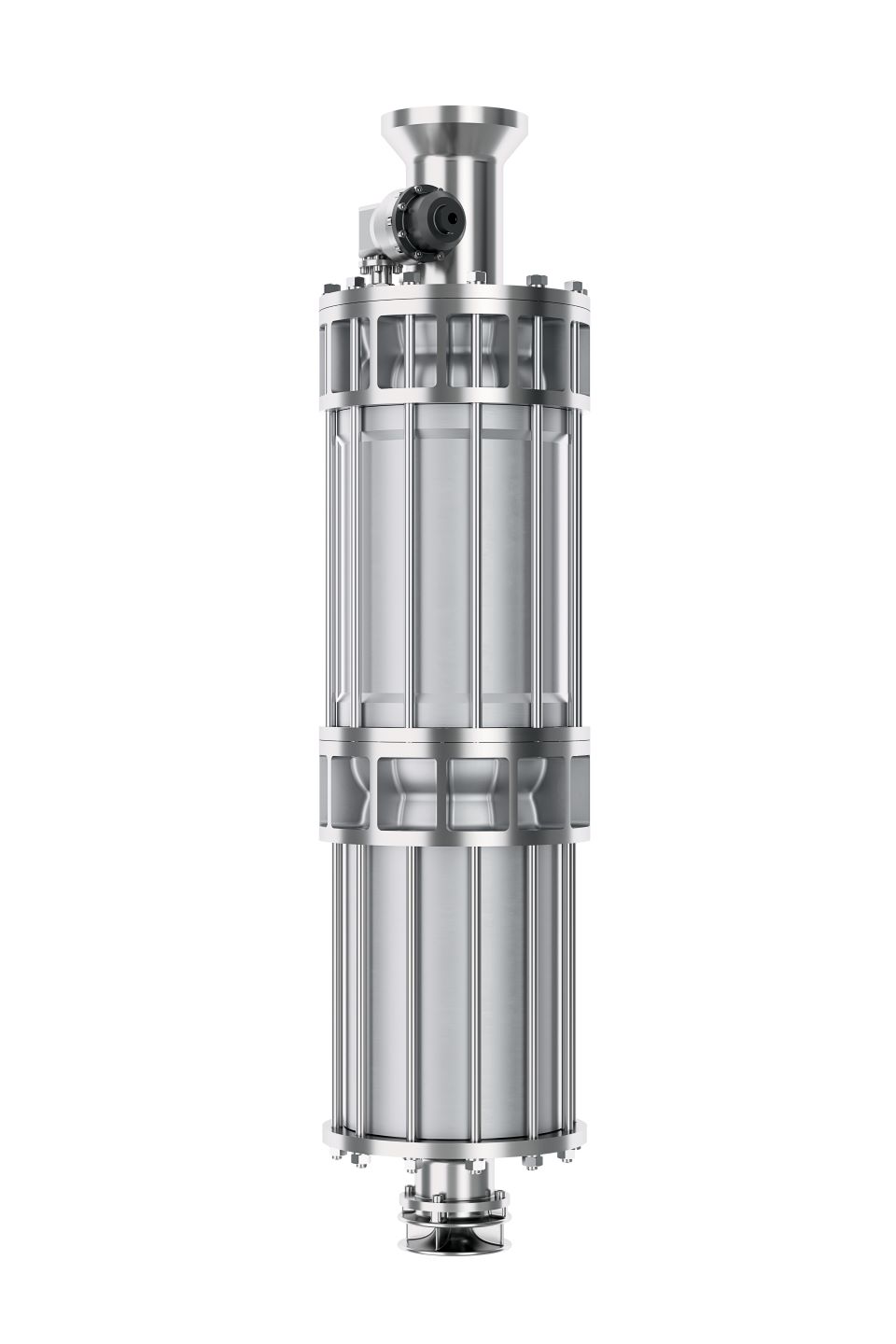
The CS (cryogenic submerged) pump is a submerged pump that is installed at the bottom of the tank.

In recent years, Svanehøj has positioned itself strongly as a supplier of long-shaft deepwell pumps, where the motor and other electrical parts are located on deck. The new CS pump, which is being presented this week at the SMM trade fair in Hamburg, Germany, makes Svanehøj the first supplier in the industry to offer both deepwell pumps and submerged pumps for electric fuel systems.

The CS pump is being launched at a time when investments in LNG-powered ships are growing strongly. At the same time, the LNG market continues to grow, driven by a sharply increasing demand for gas in Asia and Europe.

–

“With the new CS pump for LNG, we are strengthening our position in a rapidly developing market. We will differentiate ourselves from our competitors by offering advice that is neutral in terms of technology selection. In this way, we want to ensure that the customer always gets the solution that best suits the specific project,” says Johnny Houmann, director of Sales & Projects at Svanehøj.

Among LNG-powered ships with submerged fuel pumps, clogging of the pumps due to impurities in the gas is a common problem. In the design of the CS pump, Svanehøj has solved this challenge by developing a special self-cleaning LNG filter that ensures optimal flow. Svanehøj has also developed its own electric permanent magnet motor especially for the CS pump.

“Our ESG focus is about developing technical solutions for ships to support the transition to cleaner energy types. With the CS pump, we meet some technical challenges to ensure a higher efficiency of the pump and improve uptime during operation,” said Johnny Houmann.

Alfa Laval has signed an agreement to acquire Scanjet, a global supplier of tank cleaning equipment and solutions for marine, offshore and industrial applications.

Scanjet’s intelligent tank management solutions reduce the water usage and energy consumption connected with tank cleaning. The company employs around 150 people, has factories in Sweden, Poland and Indonesia, and has an annual turnover of about SEK300 million.

“Scanjet’s well-known and market-leading solutions for cargo tanks complement our existing Framo cargo pumping solutions for cargo handling. This gives us the ability to optimize tank management for our customers with an ambition to reduce their water and fuel consumption and ultimately their CO2 footprint,” says Sameer Kalra, president of Alfa Laval’s Marine Division.

“Alfa Laval is the ideal place for Scanjet’s journey to continue,” says Magnus Wallin, CEO of Scanjet. “Our companies have leading marine offerings that complement and strengthen each other. Above all, we share the ambition to exceed customer needs in full.”