spot_img

Chrome producers and ferrochrome...

Chrome ore producers, represented by the Ferro Alloy Producers Association (FAPA), are aligned...

Harmony awards Metso key...

Harmony has selected Metso to deliver the key equipment for its Eva Copper Mine Project in Queensland, Australia. The Eva Copper Mine Project is the first greenfield...

Exxaro divests FerroAlloys to...

Exxaro Resources has announced the successful completion of the sale of its entire...

Weba Chute systems delivers...

More than a decade after installation, the custom engineered transfer chutes supplied by...
Home Blog Page 41

Corrosion-resistant submersible success

0

Polluted water and run-off from mines and quarries require pumps that can handle these highly acidic liquids. To meet this challenge, Tsurumi has continued developing its range of submersible pumps that are made of 316 stainless steel casting.

Since its foundation in 1924, the Japanese company Tsurumi Manufacturing Co., Ltd. has been engaged in the manufacture, supply and sales of pumps, environmental devices and related equipment, with submersible pumps being key products. As well as producing general drainage pumps, Tsurumi puts great effort into applications for difficult-to-handle liquids, such as corrosive and high temperature liquids and seawater. The company is now launching its LH-14/LH-W-14 series corrosion-resistant pumps, which are suitable for drainage of corrosive liquids in mines.

Tsurumi’s submersible corrosion-resistant pumps are made of 316 stainless steel, allowing the LH-14/LH-W-14 series to handle corrosive acidic liquids and chemical liquids with low pH values. These pumps use highly corrosion-resistant materials for all parts that are exposed to fluids, including the impeller, pump casing, motor frame, outer cover, strainer stand and flange, so that the pumps are thoroughly protected from corroding. Stainless steel Tsurumi puts particular effort into developing submersible pumps made of 316 stainless steel casting. Recently, polluted water and run-off from mines and quarries have been cited as social problems in many countries, to the point that demand for pumps that can handle these liquids has been increasing year by year. In fact, more than 40% of the run-off from mines is strongly acidic with a pH value of less than 4. To meet this application, Tsurumi has continued development of all stainless steel pumps that are made of 316 ­stainless steel casting.

Because they are made of stainless steel casting, the pumps are resistant to wastewater containing abrasive substances, as well as corrosive liquids. These pumps have been designed to deliver the durability needed in harsh fields where pumps made of aluminium, stainless steel and cast iron suffer damage in a matter of weeks, if not days. Stainless steel casting considerably improves product ­reliability in comparison with ­stainless steel in applications involving heavy-duty work. Tsurumi’s all stainless steel pumps are intended for service in harsh ­environments such as mines and quarries and can cover a wide range of applications.

The LH-14/LH-W-14 series is a submersible stainless steel casting high head corrosion-resistant pump designed for handling aggressive and corrosive liquids. The all wetted parts are made of 316 stainless steel, enables it to withstand demanding conditions found in construction, aggregate and mining applications. Being the pump cylindrical and slim, it can be installed in a well casing for deep well dewatering.

The center flange construction assures a stable installation even if fixed by the discharge pipe. The pump incorporates seal pressure relief ports that prevent the pumping pressure from applying to the shaft seal. Furthermore, to endure even extended operation at low water level, these pumps feature flow-thru design that forcibly cools down the motor.

The LH-14 series has a single impeller, and the LH-W-14 series has dual impellers. The LH-14 and LH-W-14 series are available in a wide product lineup, covering a discharge bore diameter of 80 to 200 mm, motor output of 11 to 110 kW, and maximum head of 51.8 to 184 m.

These pumps, as well as Tsurumi’s general drainage pumps, are equipped with an anti-wicking cable, motor protector, SiC dual inside mechanical seals with silicon carbide faces, and Oil Lifter, with extensive research and a track record accumulated over many years combined into Tsurumi ­original technologies.

The material used for rubber parts such as the mechanical seal, oil seal, O-ring and packing, is FPM (FKM), which provides high resistance to heat and chemical exposure. With these features, Tsurumi pumps are designed to provide high reliability and excellent ­durability, enabling continuous operations for long periods.

Experience and expertise Making skillful use of the experience and expertise of many years, Tsurumi focuses on the development of products that can withstand demanding applications. Tsurumi offers a range of products that can serve in harsh conditions such as draining high temperature liquids and seawater as well as corrosive liquids. To order our products, please contact us direct. •

Vesconite supplies 5000-unit blanket order

0

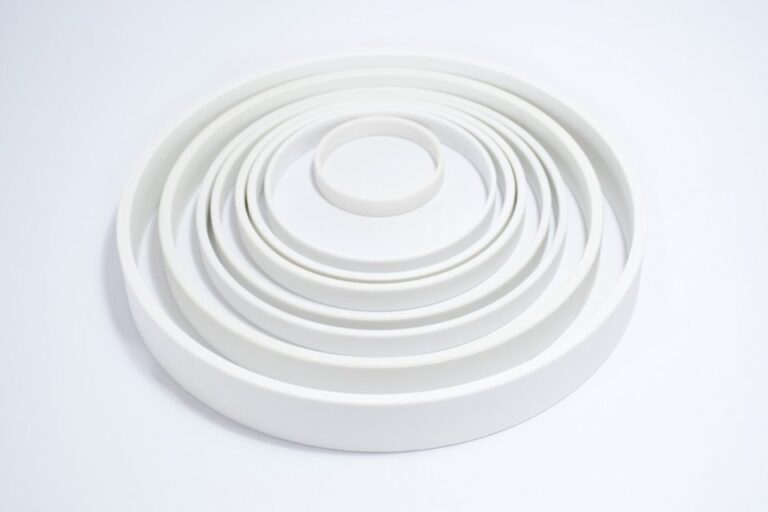
Vesconite Bearings is supplying a Georgia-based vertical-turbine pump manufacturer with a 5000-unit blanket wear-rings order, allowing the manufacturer to request low-friction Vesconite Hilube polymer wear rings for 10 of its vertical-turbine-pump models.

The company ordered its first Vesconite Hilube wear rings in 2015 and, after testing, started ordering larger quantities from 2017. In March 2019, Vesconite visited the pump manufacturer and finalised fixed volume requirements and pricing for the blanket order. The company supplies the central and south-eastern USA with pumps for the municipal, industrial, fire and flood-control industries.

The order covers a one-year period and allows the company to regularly draw on the 5000-unit blanket wear rings order. Vesconite Bearings technical sales representative, Charlie Simpson, said: “The company sees the value of using the product and has switched all of its wear rings to Vesconite Hilube ones in all of its own-brand vertical-turbine pumps.”

Vesconite Hilube wear rings allow for extremely close clearances to ensure greater pump efficiencies and are designed for use with mildly acidic or basic liquid

SCHROEDAHL announces self-modulating TDL ARVs

0

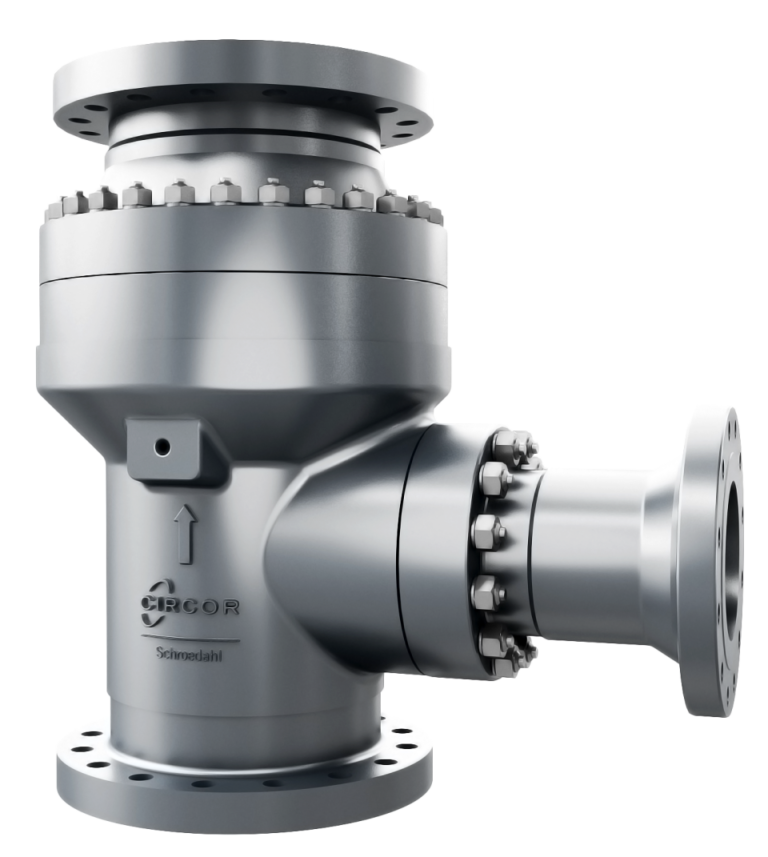
SCHROEDAHL, a CIRCOR International brand has announced that new, self-modulating TDL Automatic Recirculation Valves (ARVs) are now available in cast material that is more than 35% lighter.

The all-in-one pump protection solutions are designed to keep pumping systems running smoothly in firefighting, refinery, power and chemical applications without cavitation or overheating.

Unlike control valve packages, the self-operated flow-sensitive Schroedahl TDL Automatic Recirculation Valves operate without a separate power supply or any control system and begin protection as soon as they are installed.

The valves combine a high-quality main line check valve and the automatic bypass control system in a new, durable design. The valves’ self-actuated integrated bypass control function ensures minimum flow rate, guarding pumps against overheating and cavitation. The systems provide high pump stability with less vibration and fewer coupling or gear problems. TDL ARVs’ modulation bypass function also offers savings for operators with reduced energy consumption for frequent partial load operation.

Additionally, the bypass check valve prevents reverse pump flow, and allows for parallel pump installations.

Blackmer extends its GNX Series

0

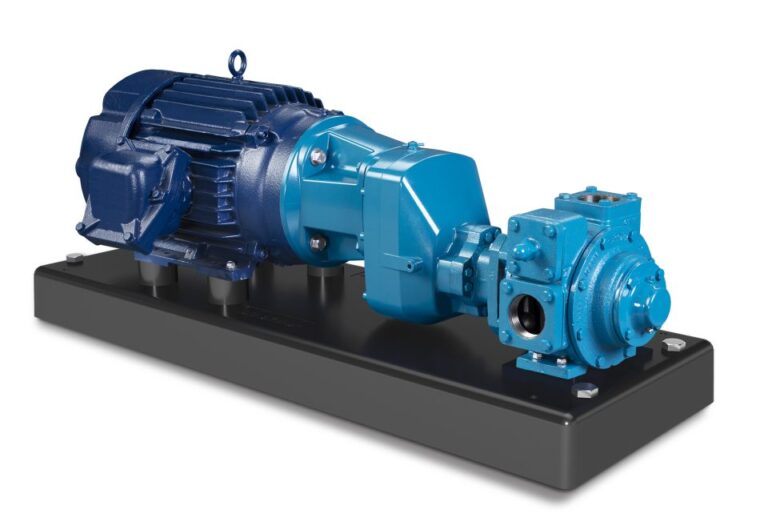
Blackmer, part of PSG, a Dover company, has announces that its GNX Series Sliding Vane pumps are now available in 3-inch and 4-inch models.

The GNX Series pumps are alignment-free reduced-speed positive displacement pump and have been designed for the transfer of non-corrosive, non-abrasive industrial and petroleum products for both portable and stationary applications.

Originally launched in 2017 in 2-inch and 2.5-inch models, Blackmer GNX Series heavy-duty sliding vane pumps include the features of Blackmer legacy GX Series pumps but also incorporate a commercial-grade, single-stage gearbox, motor and baseplate.

The new gearbox fits between the motor and pump and is held in place by a permanent dowelled connection that creates a structural link between the high-speed and low-speed sides of the system. This results in a pump that will not need to be realigned either at initial installation or following maintenance. The 2-inch and 2.5-inch models have aluminum gearboxes and the new 3-inch and 4-inch models have cast iron gearboxes.

GNX Series pumps provide flow capacities ranging from 7 to 500 gpm (25 to 1,893 L/min) at working pressures up to 175 psi (12.1 bar).

Wanner introduces new Hydra-Cell model

0

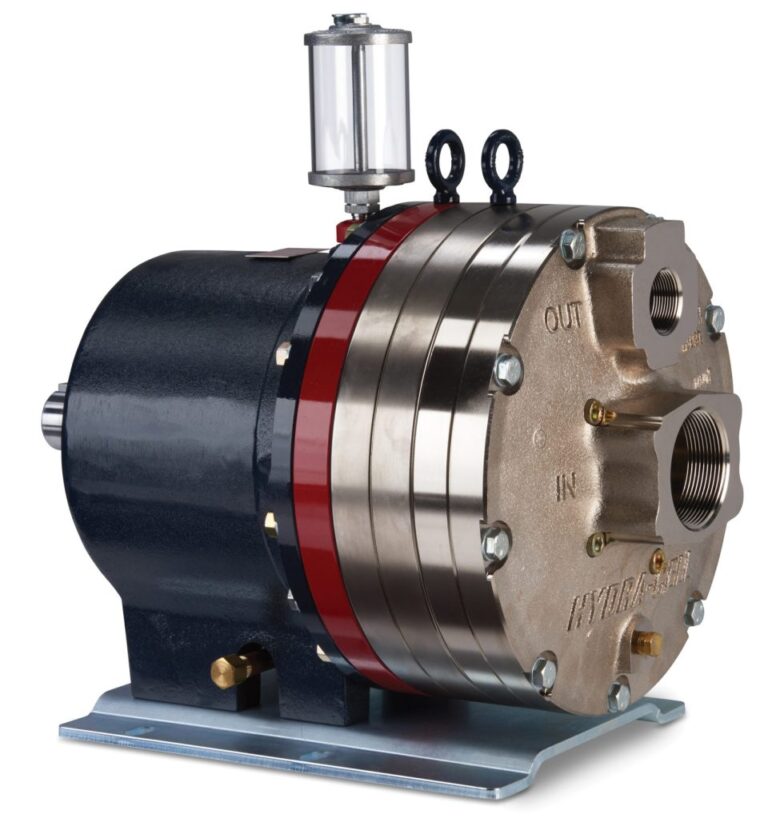
Wanner Engineering has introduced the Hydra-Cell D66 Series seal-less positive displacement pumps for use in processing, OEM, municipal, and commercial applications.

The new Hydra-Cell pumps offer a maximum flow capacity of 65.7 gpm (248.7 l/min) and pressure ratings up to 700 psi (48 bar) for models featuring brass, ductile iron, or 316L stainless steel (metallic) pumps heads and 250 psi (17 bar) for models equipped with polypropylene (non-metallic) pump heads.

The company says that the seal-less design of Hydra-Cell D66 pumps means that there are no mechanical seals, cups, or packing to leak, wear, or replace. It has spring-loaded, horizontal disk check valves and the D66 seal-less design allows it to handle viscous fluids and abrasive particulates up to 800 microns in size. The D66 also features Wanner Engineering’s Kel-Cell technology so that in the event of a closed or clogged inlet condition, the D66 will run dry indefinitely without damage to the pump.

The new Hydra-Cell D66 is available with NPT or BSPT as well as SAE flanged NPT or BSPT ports and with a choice of pump head, valve, diaphragm, and o-ring materials.

Toxic handling in API manufacturing

0

Handling corrosive, toxic and flammable materials needs a special type of pump. When it was time for API manufacturer Ofichem to upgrade its pumping equipment, it found that Almatec® E-Series and CX Series AODD pumps proved the ideal solution.

The Dutch Ofichem Group BV is a developer, manufacturer and distributor of active pharmaceutical ingredients (API) for use in the global human and veterinary-medicine markets.

One of the most dangerous chemicals Ofichem handles is hydrochloric acid, which is highly corrosive and must be handled with extreme care. To that end, because of the toxic, corrosive and dangerous nature of many of the raw materials that Ofichem uses, safety for both site personnel and the environment is an overriding day-to-day concern.

In the large-scale production area, for example, as many as 500 kilograms (1,100 pounds) of solvents, acids or powders will be transferred in a single day, with various liquids also used to facilitate any number of chemical reactions.

Equipment upgrade In 2007, Ofichem was looking to upgrade the pumping equipment at the lab and contacted Gerrit Klaassen, commercial director of Holland Air Pumps, Oirschot, The Netherlands, for some recommendations.

“If you look at safety issues, our highly toxic products are kept in special areas, things like carcinogenics that cause cancer,” said Remco Vree Egberts, R&D manager and project leader for the Ofichem Group. “Also, if there happens to be a fire, we mandate that the area should be enclosed for at least 60 minutes.”

“For me, it was obvious that Ofichem needed a safe pump in this environment, one that has no leakage,” said Klaassen. “A plastic pump that is easily cleaned and has no corroding parts would be ideal for the application.” Handling corrosive, toxic and flammable materials is a fact of daily life at the Lab Ofichem facility, which is why it is critically important that the correct type of pump be identified and incorporated into the production process.

Wim Ekkelkamp is Ofichem’s technical manager and the man responsible for purchasing the pumps that are used in the Lab Ofichem production facility.

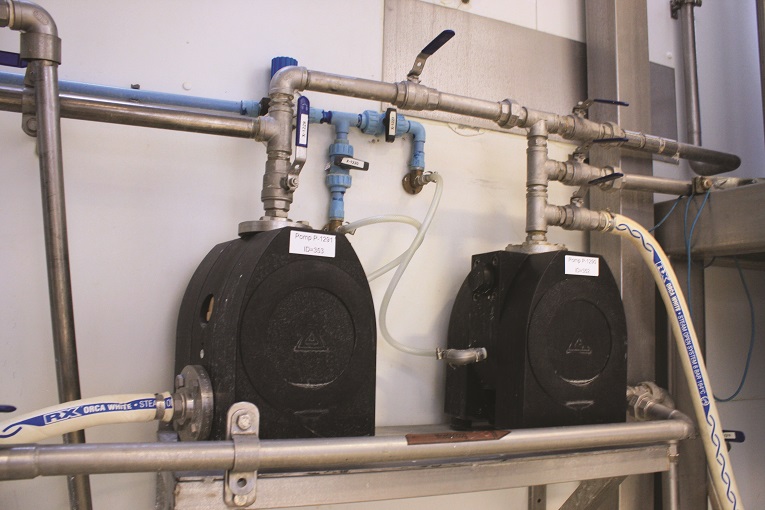
Ideal solutions As it happens, Holland Air Pumps is a distributor of air-operated double-diaphragm (AODD) pumps from Almatec®, Kamp-Lintfort, Germany. In analyzing Ofichem’s API-production setup, Klaassen determined that the Almatec E-Series and CX Series AODD Pumps would be the ideal solutions. E-Series and CX Series pumps are made of solid-block PE conductive material and rated for use in explosion-protected areas as they meet the ATEX requirements of European Directive 94/9/EG regarding the use of equipment or systems in potentially explosive atmospheres.

In terms of operation, these pumps are self-priming and dry-run capable, and possess the ability to empty containers completely. Air consumption and operating cost are optimized through the incorporation of the patented, maintenance-free PERSWING P® air-control system.

“Ofichem chose these pumps because they are reliable, they are very easy to clean, both on the outside and the inside, they are ATEX-certified, which is very important in our production areas, and they have very quiet operation; these are the reasons why we use the Almatec pumps,” said Ekkelkamp.

Low downtime “The thing is, quality is also important, because if you buy a cheaper pump but have downtime of one month every year, then the pump is not cheaper,” added Egberts. “With these pumps we have very low downtime and that’s the most important for us because if our production time is down one day we will lose at least €7,425. That’s why we choose pumps based on quality, not price.”

When the Ofichem Group decided that the time had come to introduce Good Manufacturing Practices to its API-production operation, it knew that this meant that each and every aspect of production would have to operate at the highest level of efficiency and safety.

“We have to keep production moving, we have to keep downtime as low as possible, and we have to be safe, so when we are purchasing any new equipment, the quality is very important,” Egberts said.

So choosing the proper pump technology became a top-of-mind concern for Ofichem’s daily handling many different types of hazardous, toxic, flammable and corrosive chemicals. Any concerns have been assuaged through the incorporation of Almatec AODD Pump technology in its chemical-handling applications.

“It’s very important that our pumps don’t break, that they have solid-block construction and that they don’t have any corrosion,” said Egberts. “If there is any corrosion in the pump, I can’t use it anymore.

We chose the Almatec pumps because they are capable of handling the products we are using. It’s a personal-safety issue — you don’t want any leaks, you don’t want people getting products on them. It’s also a product-safety issue, which in our business is very important. We have been using Almatec pumps for more than 11 years at this facility and we’ve never had a problem with them. We are really happy with them and will continue to use them in the future.”

Goulds Pumps expands ISO standard pump range

0

ITT’s Goulds Pumps has added the IC Open (ICO) Impeller i-FRAME pump to its portfolio of ISO standard pumps.

Designed to handle chemical slurries and waste liquids and challenging food and beverage applications, the ICO augments the standard IC pump design with an open impeller for handling solids. This new feature means that the ICO is also able to deal with air- and gas-handling applications.

Available in 34 sizes and three different materials, ICO is built to ISO 2858 dimensions and meets ISO 5199 standards. In addition to the open impeller, the pump features flanges drilled to DIN/ISO or ANSI, plus a modular design of four bearing frames, which maximises interchangeability across its 34 sizes.

The pump can deal with flows up to 400 m3/hr and heads up to 150 m at temperatures ranging from -40ºC to +280ºC and has a cyclone seal chamber with improved heat removal plus a patented spiral groove design that removes solids from the sealing area.

Its heavy-duty i-FRAME Power Frame helps prevent pump bearing failures and there is also an i-ALERT 2 sensor for continuous machine health monitoring.

PALABORA VENTILATION SHAFT REACHES A DEPTH OF 800 M

0

The Murray & Roberts Cementation shaft sinking team responsible for delivering a new ventilation shaft at Palabora Copper Mine (PMC) recently celebrated the achievement of a major milestone – the reaching of the 800 m mark. This represents two-thirds of the shaft’s final depth of 1 200 m.

The ventilation shaft forms part of the copper producer’s Lift II project which will extend mine life by more than 15 years. Originally an open pit mine, the Palabora mine transitioned to being an underground block cave operation in the early 2000s when Lift 1 was commissioned.

PMC is located within Phalaborwa in the Limpopo province in South Africa and the extension of the life of mine will increase shareholders’ value and sustain jobs and livelihoods of the surrounding communities. The mine has also initiated several wildlife management programmes to minimise the impact of its operations on the environment as well as promote the harmonious co-existence of people, industry and wildlife.

Murray & Roberts Cementation’s contract to sink the 8.5 m diameter shaft was awarded in February 2019. According to Fred Durand, the company’s senior project manager, the shaft sinking is currently making good progress, with 40 or more lined metres of advance being completed on average each month.

“Shaft sinking operations should be completed by the end of this year with final handover of the shaft to our client, PMC, taking place at the end of the first quarter of 2024,” he says.

Ground conditions have presented a challenge on the project. This has resulted in the shaft lining being taken right down to the blasted face, says Jas Malherbe, Murray & Roberts Cementation’s on-site project manager.

“Normally, we would line the shaft to within 12 to 18 m of shaft bottom and support the sidewalls temporarily with split sets and mesh,” he explains. “In practice, this did not prove viable, prompting us to change our approach. The method we’ve adopted is unconventional but has proven to be highly effective.”

Drilling is undertaken by two twin-boom Komatsu electro-hydraulic jumbo drill rigs. These are slung down the shaft from surface and nested in the four-deck stage for drilling the shaft bottom, a procedure which is repeated for each 48-hour blast-to-blast cycle.

Another key piece of equipment is a Komatsu excavator with a 0.3 m3 bucket. It is lowered from surface through the stage to shaft bottom and is used for lashing. All the waste rock is loaded into a 11 tonne kibble which transports it to surface.

The ground conditions at the shaft are such that blasting tends to produce large rocks, which can be difficult to handle. “We break these up using the excavator which has a quick coupler which allows it be fitted with a hydraulic breaker within a few minutes,” says Malherbe.

The methods being used at Palabora are based on the Canadian shaft-sinking method that Murray & Roberts Cementation has pioneered in South Africa at its Venetia mine contract for De Beers Group.

“We have adapted the method because of the very different conditions we’re facing but many elements remain the same or are very similar,” says Malherbe. “In particular, the high degree of safety offered by the Canadian method has not in any way been compromised.”

The number of Murray & Roberts Cementation personnel deployed per shift is 25. The total labour complement on site is currently just over 120 people, 46 % of them recruited from local communities.

Murray & Roberts Cementation has a vigorous CSI programme running in conjunction with its contract. The programme is being implemented in close association with PMC and has mainly focused on supporting local schools in the Phalaborwa area with infrastructure such as ablution facilities, fences, water storage tanks and boreholes.

“In addition, we have trained nearly 80 youths from local communities at our Bentley Park Training Academy near Carletonville,” says Durand. “Another 20 are currently undergoing training. This programme is giving them skills which are in high demand in mining and which could lead to them securing permanent employment within the mining industry.”

Mevas- Global Leader in Machinery and Heavy Equipment Inspection Services

0

Heavy Machinery Appraisal

In the mining sector, situations arise time and again in which assets have to be evaluated. Be it when there is a change of contractor in opencast mining or when technology is to be replaced on a larger scale. Especially when there is a change in ownership or when used construction machinery and transport vehicles are to be replaced, an external valuation or technical inspection is appropriate. Sometimes an appraisal by the supplier of the technology is sufficient. However, it is often the case that each supplier can and wants to evaluate only his own products. It becomes more difficult when someone is needed to evaluate excavators, wheel loaders and mining trucks from different manufacturers and maybe additional processing plants. Here you need an appraiser who has a wide range of experience with different makes. Such an appraiser needs good management as well as technicians in different countries who are also willing to visit a mine in a distant country.

Who can inspect and evaluate mining equipment?

It is good to know that such a service exists. The German company MEVAS specialises in the appraisal and valuation of mining assets and construction machinery. Experienced inspectors are available in various countries and are ready to travel even to remote areas. The team has experience with large excavators, dump trucks, crushing equipment and anything else used in open pit or underground mining. Through the large number of projects already completed, a wealth of experience exists in both the technical analysis of condition and the evaluation of equipment.

How much does a mining-fleet appraisal cost?

The question of the price for evaluating a fleet of mining machines is not so easy to answer. It logically depends on the number of machines and their size. Another important cost factor is the location of the equipment. Which inspectors can be deployed to inspect the machines on site? By what means can the inspectors get into the mine? Are the machines still in use or have they been parked on the side-line for some time? Overall, one can conclude that compared to the value of the machines, the valuation is an insignificant cost factor. When taking over a fleet or buying individual machines, it may well be worthwhile to have the repair costs calculated in their current condition. An experienced valuer can be helpful here.

Why to choose Mevas?

A German management leads since 2006 a team of international inspectors. The team knows about equipment conditions and about valuation. Engineers are familiar with machinery of Caterpillar, Komatsu, Hitachi, Sandvik and many other brands. The range of inspected and valuated items reaches up to PC 3000, ZX 1900 CAT 777, larger rock drills, bulldozers up to D10T and any kind of articulated dump trucks.

Experienced Team of Engineers

Mevas has done a couple of asset audits and valuations for quarry, mining and open pit equipment. Engineers have been in Russia on pipeline projects, in African goldfields, in coal mines in Kentucky and on huge oil plantations in Western Africa. Upon request, some projects and clients for which the company is or was active can be named.

For more details visit the website www.mevas.net please. Sample reports can be provided and the management is available to discuss any requirement for machinery appraisal or inspection.

START WITH CHUTE DESIGN TO REDUCE DUST, SAYS WEBA

0

Many industrial facilities, mines and power stations rely too much on dust suppression and extraction systems, when the real answer is to improve the flow of material through well designed chutes.

This is the considered opinion of Weba Chute Systems technical director Alwin Nienaber, based on decades of experience in this field. His view is that 50% to 80% of the dust problem around conveyors and transfer points can be resolved by applying the right chute system design and positioning equipment correctly.

“Many of the dust suppression and dust extraction systems that are applied in these applications are expected to do more than they are capable of,” says Nienaber. “A preferable approach is to get the chute design right first, and then apply these other systems to deal with the residual dust load.”

He explains that the advantages of doing this extend well beyond the health and safety benefits. He has seen more than a few situations where the dust created by a poorly designed chute can prevent personnel from moving or working in that area. This often prevents the checking or maintenance of critical equipment during operating hours, requiring more downtime to wait – literally – for the dust to settle.

“In examples like this, excessive dust can reduce an operation’s efficiency, so there is an opportunity to improve overall productivity by fixing the dust problem,” he says. “Other equipment in these areas also gets heavily coated with dust, and needs regular cleaning to ensure optimal performance. Cleaning becomes yet another avoidable cost.”

To address excessive dust creation, a good chute design is based on understanding the physics of material flow – and avoiding uncontrolled velocity and impact. A lack of control over the way material flows will degrade the material and create higher levels of aeration – which is what leads to dust dispersal.

“Our philosophy at Weba Chute Systems is to ensure that material flows more easily and remains consolidated as a homogenous stream,” he explains. “We base our designs on the ‘supertube’ effect, which also allows the controlled transfer of material onto the conveyor belt. Not only does this reduce dust, but it also cuts down on the wear rate of the belt itself.”