


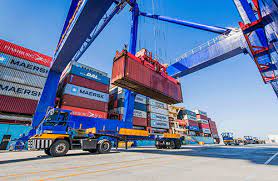
The Namibian Ports Authority continues to make positive strides toward its vision of becoming the best performing seaports in Africa. The parastatal experienced challenges such as the COVID-19 pandemic, global container shortage and blank sailings. Despite these ongoing challenges, the Authority recorded positive growth during its financial year 2021/2022.
Namport CEO, Andrew Kanime confirmed the total year on year cargo handled amounted to 6.5 million tons, indicating an increase of 6%. Vessel visits also increased by 289 vessels or 22%. The increase in vessel calls was predominantly due to an increase in petroleum vessels, Namibian and foreign fishing vessels, foreign tugs as well as research vessels.
The Ports Authority also announced that Twenty-foot Equivalent Unit’s (TEUs) handled amounted to 168,278 of which, 61,106 TEUs or 36% were exported. A further 69,467 TEUs or 41% were imports and 37,705 TEUs or 22% were transshipments. TEUs increased by 12,298 or 8%, year on year.
This increase was mainly due to increased containerized commodities such as copper, charcoal, frozen fish, marble, frozen poultry, sugar, chemicals, scrap steel and wooden products. Namport further indicated that bulk and breakbulk (BBB) volumes handled amounted to 4.4 million, of which, 1.8 million tonnes or 40% were exports, 2.6 million tonnes or 59% imported, and 34,709 tonnes or 1% were transshipped.
Overall the BBB volumes increased year on year by 360,189 tonnes or 9%. This increase came as a result of increased commodities such as petroleum, steel, frozen fish, ammonium nitrate, iron ore, marble, ship spares, manganese ore, and flat cartons.
The volume performance is certainly commendable given the tough operating environment that characterized the financial year that was. Cross border volumes statistics also show that cross-border volumes increased by 10% from 1,464,000 gross tonnages during the 2020/2021 financial year to 1,606,984 gross tonnages during the 2021/2022 financial year.
At least 48% of the volumes are from South Africa, 23% from Zambia, 15% from the Democratic Republic of Congo (DRC), Zimbabwe and Botswana 6% each, 2% from Angola and 1% from Malawi.
According to the statistics, major commodities exported from SADC countries through Namibia are currently copper, manganese ore, and wooden products (Timber). Major commodities imported to Namibia destined to SADC Countries are frozen poultry, vehicles, machinery, spare parts, tyres, chemicals for mining use, electrical goods and electrical equipment.
The Namibian Ports also handle an assortment of cross-border cargo imports and exports via 4 main trade corridors; Trans-Kalahari Corridor, Walvis Bay-Ndola-Lubumbashi Corridor, Trans- Cunene Corridor and Trans-Oranje Corridor.
These corridors connect the Ports to the respective SADC markets namely Zambia, DRC, Botswana, South Africa, Zimbabwe and Angola. This performance is a testimony of an aggressive approach to developing the ports as the preferred SADC gateways.