spot_img

Zamboye mine disaster: When...

Zamboye mine disaster: When a closed mine keeps operating, who is responsible?

Weba Chute System’s grounded...

Across the global mining sector, Discrete Element Method (DEM) simulation has become a standard feature...

Kal Tire expands mining...

Kal Tire’s Mining Tire Group has signed an agreement with Transcale Pty Ltd.,...

One system, one supplier:...

ACTOM, South Africa’s largest manufacturer, repairer, and distributor of electromechanical equipment, has reaffirmed...
Home Blog Page 29

Multi-Purpose Container Terminal-Mozambique

0

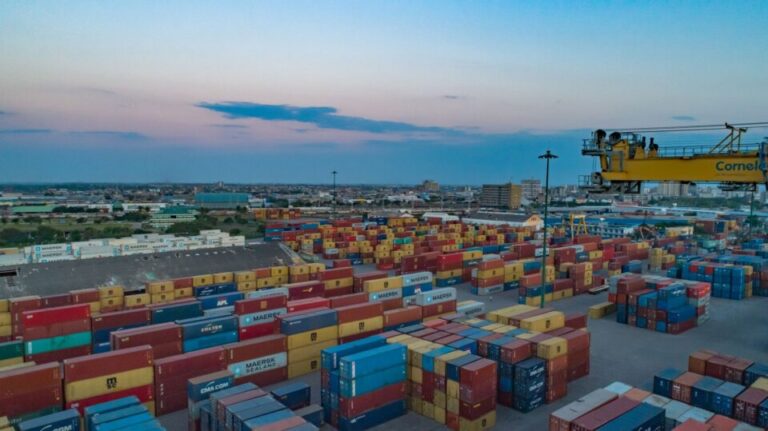
This is one of the most modern Terminals in Southern Africa. The facilities include a 645 meters long quay with a depth of 12 meters. The terminal has 4 container gantry-cranes, two of which have the capacity to carry 65 tonnes. The terminal can store more than 10,000 TEU’s and has 148 electricity connection points for refrigerated containers. Currently, the terminal can handle 300,000 TEU’s a year, but, with the continual investment programmed, its capacity could gradually be increased to 700,000 TEU’S. The terminal is served by an extremely modern computerized management system-Navis N4-regarded as the most advanced in the port industry worldwide. This is a computerized platform endowed with state-of-the-art technology which offers enormous advantages in increasing and improving the operations undertaken at the Container Terminal. It also allows online communications with shipping lines, the shipping agencies and clients who can accede to the mechanism to send correspondence concerning the loading and unloading of containers, and to obtain all the relevant information about the state of the logistical base. Recently, this terminal benefitted from an investment to increase the capacity of its container storage space to an area of 3 hectares, as well as the building of a new five lane access road, with the option to add a further two lanes in the future.

Eazi Access Provides Safe Working Environments at Height

0

Eazi Access, is one of Africa’s market leaders in the rental, sales, servicing and training of work-at-height and material handling solutions. We have a strict commitment to safety, reliability, and productivity, across everything we do and in all industries, we serve. We have partnered with trusted OEM’s, JLG and Linde Material Handling, to provide safe working environments.

This is achieved through the different equipment we have on offer. Within the equipment range, we have aerial lifts, boom lifts, scissor lifts, telehandlers, and low-level access lifts ensuring workers are lifted safely and efficiently. Within the industry this lifting equipment is  commonly referred to as Mobile Elevated Work Platforms (MEWPs) which have multiple benefits, and are available  to our customers on a rental or sale basis.

MEWPs are safe, manoeuvrable and time saving machines used to lift workers into spaces they otherwise would not be able to reach. MEWPs are used on both indoor and outdoor worksites to eliminate the risk of accidents associated with climbing, lifting, and even falling on the job. The need to keep workers safe while accessing high areas is common between many different sectors, making MEWPs versatile and universally needed. They are also flexible between different tasks on the same project. They can be easily adjusted for different heights, and some are even designed for use on smooth and rough terrains.

This makes a worksite more accessible by increasing the workers’ reach, whether they’re in a warehouse, on a mine, on a construction project or at an event. When a customer comes to Eazi Access looking for a MEWP, we invest time in performing a thorough diagnosis before we can recommend the suitable solution. We go on-site where we take measurements and look at the size of the area and fully understand the objectives of the customer for the job at hand. After which, we recommend the best fit solution for the job on-site. We can provide a complete solution for the different industries from the highest machine which is up to 58.56 metres to the smallest scissor lift that can be use in the warehouse.

According to Blaize Wulfsohn, Eazi Access GM: Compliance & Enterprise Risk Management other industry drivers for MEWPs include health and safety as they reduce fatigue and risk, productivity through increased flexibility and efficiency, while technology advances have also led to more reliable mobility and control. Renting MEWPs for hard-to-access jobs can save money by increasing productivity across the worksite.

As a business we are enthusiastic about the safety, efficiency, and cost benefits we can deliver to our customers and we pride ourselves in consistently ensuring that every customer, regardless of industry, size, or scope of needs, receives the highest level of service and professional advice to ensure our customers get the right machine for their specific requirements. One of the ways we ensure safe working environments for our employees and customers is through training and compliance to regulations which is essential in creating safe working environments.

In order to operate access equipment workers are required by law to undertake training. As a business, providing this training is beneficial to both our customers and to our operators

Wulfsohn adds that “our safety promise underscores every facet of our business. Uplift Quality Solutions, our training business, specialises in operator training on mobile elevated work platforms (MEWPs), telescopic boom handlers, forklifts, overhead cranes, and mobile cranes. Customers can choose between having their own operators trained in line with industry standards and manufacturers’ specifications, or we can provide readily available, trained Eazi Access operators to work on-site.”

Eazi Access and our training business, Uplift Quality Solutions are both members of the Institute for Work at height (IWH), which is the recognised industry professional body registered with SAQA (South African Qualifications Authority). Members of the IWH are declared fully competent to practice in a specific field of the Work at height Industry and members have to comply with the IWH Code of Ethical conduct. Uplift Quality Solutions is accredited as a training provider by the IWH and is also registered with full accreditation with the TETA (Transport Education Training Authority). Our association with IWH and our accreditations with the TETA and IWH provides comfort to our customers on the quality standards of our training provided, the quality of equipment used for training as well as the issuing of legitimate IWH training certificates. The IWH training certificates have the advantage of avoiding the delays with issuing of training certificates by the TETA and allows the trainee to start operating the respective equipment soon after the training.

Keeping safety and training topical within the industry is a key target adopted through the years. However, despite the increased training provided, incidents still happen. Also, with newer and improved models being delivered to the market training continues to be crucial for anyone operating a MEWP.

BLT WORLD offers transport systems for safe and efficient handling of wind turbines.

0

Durban-based material handling specialist, BLT WORLD, supplies and supports an extensive range of handling equipment, including transportation equipment designed especially for the wind turbine industry.

Novatech’s specialist equipment for the safe and efficient transportation of wind turbine components encompasses wing transportation, tower and Nacelle brackets.

BLT WORLD’s Novatech self-contained tower lifters are used for safely transporting wind turbine towers on board ro-ro ferries, with no risk of damage to components. The robust tower lifters, with a maximum lifting capacity of 80 t, are fitted with a hydraulic pump unit for dependable powering of lifting and steering cylinders. The tower bogie system, with a 140 t load capacity, has been designed to transport towers safely and securely around ports.

The company’s portfolio of container and bulk handling equipment also encompasses Mobicon straddle carriers, Taylor empty and loaded container handlers and reach stackers, as well as Meclift variable reach trucks for swift and safe container stuffing and handling.

Terminal tractors can be customised for specific handling tasks required. The company is also the exclusive distributor in Africa for the Samson range of bulk handling equipment, which includes material feeders for loading and high capacity stockpiling, link conveyors and eco – hoppers, as well as mobile shiploaders. BLT WORLD also distributes MDS trommel screens and apron feeders for mineral processing and recycling applications.

The company supports this equipment with a technical advisory and original spare parts service to all sectors, including shipping, mining and quarrying, civil engineering and construction, as well as general engineering, materials handling and agricultural industries.

Grindrod sets up new export route for Botswana coal.

0

Grindrod’s Matola terminal at the Port of Maputo says it has welcomed its second coal train from Botswana. The terminal also managed to successfully discharge the 50 wagons using the terminal’s tipplers.

The first train arrived at the port in April, marking a milestone for Grindrod’s Mozambican drybulk terminal.

This rail consignment of 40 wagons each carried around 2 000 t of mineral coal. The train originated from Palapye, in Botswana, transiting through Zimbabwe via the Chicualacuala rail network, to the final destination in Maputo.

Grindrod loaded the cargo on a vessel destined for Europe.

This follows the dispatch of a sample load to the Matola terminal, in order to confirm the compatibility of the Botswana wagons with the terminal’s tipplers.

This successful collaboration between African Railway Company, Botswana Rail, National Railways of Zimbabwe, Mozambican Railway Company (Caminhos de Ferro de Moçambique) and Grindrod, has managed to create a new export route for Botswana coal producers.

It is envisaged that the corridor could realise a yearly export volume of 350 000 t to 400 000 t of coal from Botswana.

Botswana is attempting to develop a number of new coal mines, but as it is a landlocked country it requires a cost-effective, efficient crossborder export route.

Cornelder inaugurates additional equipment

0

On the 10th June on quay 2-3 Beira Port Container and General Cargo concessionaire Cornelder de Moçambique inaugurated a new lote of handling equipment in addition to rolling out a new automated application called C- Gate. This event was presided by the Minister of Transport and Communication.

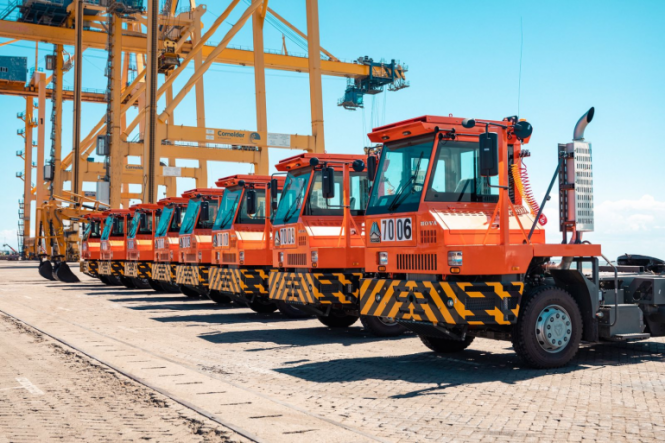
The new equipment bought by CdM is made up of forklifts, terminal tractors, escavators and elevation equipment and represents a total investment of approximately 10 million American dollars.

C- Gate is a mobile web application developed internally by CdM and permits automization of the truck access control in addition to the registration of drivers, trucks and containers that daily gate into the Terminal. This is the first step of a complete automization process for the Container Terminal.

Besides increasing CdMs handling capacity substantially and safety measures this investment will contribute to the competitiveness of the Beira Corridor.

Specialised-Container-Agencies-Intermodal-side-tipper-bins-rail&road.

0

Specialised Container Agencies (SCA) – suppliers of niche market container products – has developed an intermodal side tipper bin, that provides efficient bulk handling rail solutions, encouraging greater utilisation of rail wagon container haulage.

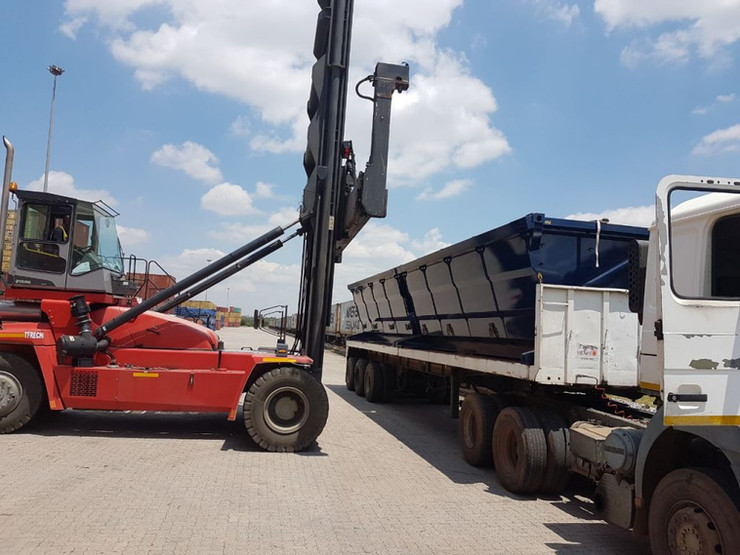
“SCA’s intermodal tipper bins ensure quick, safe and cost-efficient bulk handling in rail and road applications. What’s notable is this intermodal side tipper bin system increases payload on rail wagons – from 54 metric tons to 60 metric tons. A single tipper bin is able to hold 30 metric tons for road transport,” explains Ken Mouritzen, director, Specialised Container Agencies. “Robust intermodal side tipper bins are easily handled onto container rail wagons and road trucks by a container handler.

“Side tipper bins have been designed for rapid and efficient off-loading of materials from both rail wagons and road trucks, using specially designed hydraulic tipping cylinders.

“An important feature of these intermodal side tipper bins – which are able to be stacked two-high for storage – is they can be used across different modes of transport, including road and rail, without the need for investment in double handling cargo. This system is boosting the utilisation of rail infrastructure, which significantly reduces transport costs, decreases national road congestion and minimises product damage.

“In areas that are not fully serviced by rail, the intermodal side tipper can be loaded onto road transport, for closed loop, short-haul operations. Road vehicles are then used to carry the tipper bin containing bulk material to the railhead. This means cargo can be received at non-rail serviced facilities, for example on mines, terminals and ports.”

For the transporter, benefits of using robust intermodal side tipper bins are lower operating costs, minimal cargo loss and weather-proof tarpaulins ensure product integrity during transport. Advantages also include cost-efficient, easy handling of bulk, improved safety for drivers, vehicles and cargo, as well as reduced insurance premiums.

HINO 700: COMING TO A DEPOT NEAR YOU!

0

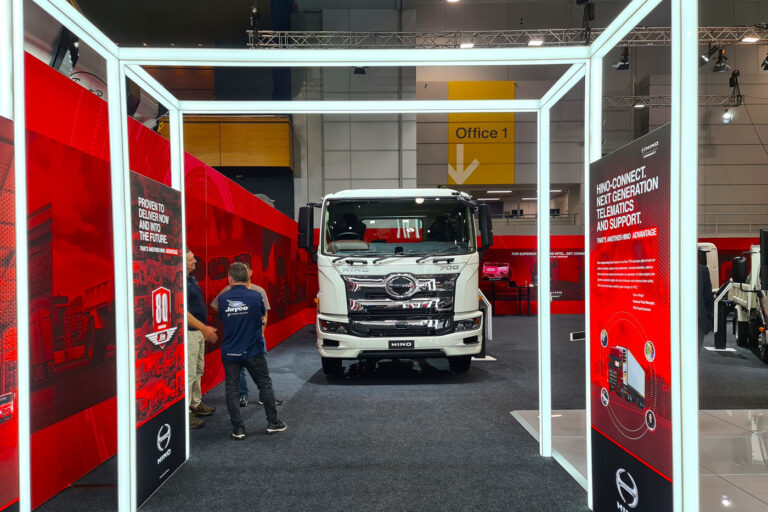
The Hino 700 Line-off Ceremony is happening next week, and we will be there. We saw the truck in the metal at last week’s Brisbane Truck Show and we reckon operators are going to be extremely impressed.

The 2023 model takes big steps forward in terms of its technology, with huge benefits regarding active and passive safety systems as well as improved fuel economy, all of which contribute to a lower total cost of ownership.

The latest 700 Series is a major step up from its predecessors in terms of the extensive safety technologies offered as standard features. It also constitutes a completely redesigned cab that ensures greater comfort for the driver, while weight reduction improves the 700 Series’ operating efficiency.


THIS IS THE WORLD’S MOST POWERFUL TRUCK!

0

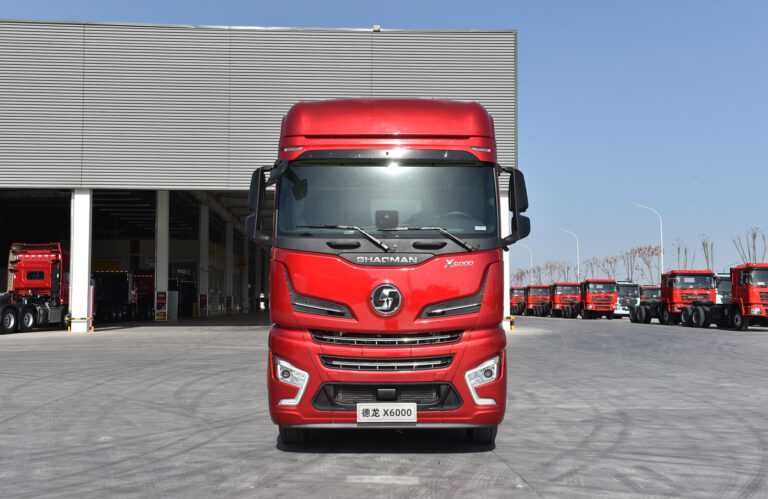
Chinese truck maker Shacman has launched the world’s most powerful tractor unit, a title previously held by the 770 hp-rated Scania V8.

The X6000 800 is powered by a Weichai 16.6-litre Euro 6 engine, which is matched to a Fast Speed 16-speed fully automated transmission. In addition to offering 30 hp more than Scania’s top power trucks, it also has 50 Nm additional torque at 3 750 Nm.

As you can see from the 6×4 example photographed, the Shacman X6000 800’s exterior bears a striking resemblance to the latest Mercedes-Benz Actros. It’s a similar story inside the flat-floored cab too, which features a pair of large colour screens and an uncluttered dashboard. Safety features include adaptive cruise control, tyre pressure monitoring system, and lane departure warning.

Shacman is part of the Shaanxi Automobile Holding Group, which according to its website has a presence in 100 overseas countries and regions. These include Africa, the Middle East, Southeast Asia, Central and South America, and parts of Eastern Europe. The Shacman X6000 800 has already been introduced in the Chinese and Russian markets, and is also expected to be produced in Argentina for Latin America.

IVECO GOES GREEN

0

FPT Industrial, the global powertrain brand of the Iveco Group, has inaugurated its new ePowertrain plant in Turin – and we were there!

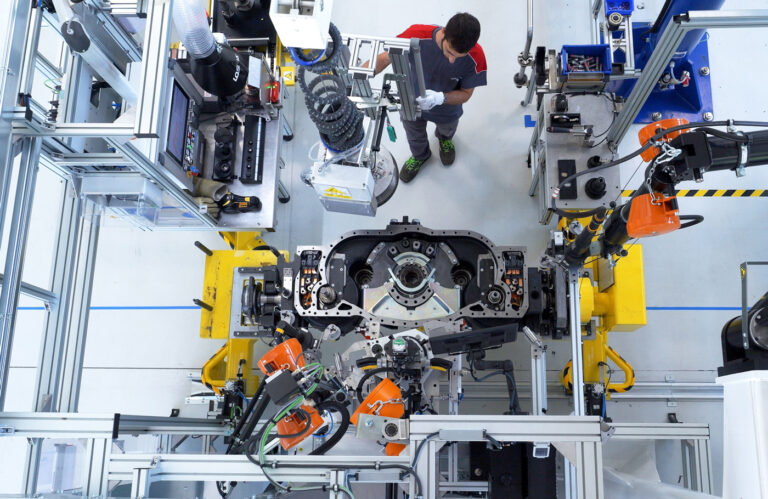
The opening of the facility is extremely significant because it’s the world’s first carbon-neutral Iveco Group plant. Measuring 15 000 m2, the plant is dedicated to the production of the brand’s electric range, including electric axles, electric central drives, and battery packs for light commercial vehicles, minibuses, and buses. At full capacity, it will produce over 20 000 electric axles and over 20 000 battery packs per year for LCVs, minibuses, and buses. The plant is ultimately expected to employ about 200 people.

We toured the facility, which looks a bit more like a hospital than a factory; spotlessly clean, the plant has implemented numerous health and safety measures to protect the workers (who are, after all, dealing with high voltages).

Next-generation technologies adopted include augmented and virtual reality (which reduce the design time for production lines by simulating operational outcomes before physical installation); 3D printing and “Smart Observer” systems based on intelligent sensors; 3D scanners for metrology-grade measurements; 3D reality simulators; and cooperative robots. These robots, together with Automated Guided Vehicles, greatly improve ergonomics and safety, making the operators’ jobs easier and less stressful.

Below: Sylvain Blaise, president of the Powertrain Business Unit; Domenico Nucera, president of the Bus Business Unit; Luca Sra, president of the Truck Business Unit; and Annalisa Stupenengo, chief operations officer of the Iveco Group, participated in a panel discussion at the official opening of the plant.

The state-of-the-art factory has implemented numerous health and safety measures to protect the workers. No heavy lifting is required, for instance.

AUTONOMOUS DRIVING: WHERE TO NEXT?

0

What does the future of autonomous driving hold? That is what GIANENRICO GRIFFINI tried to establish in this question and answer session with CEO of Torc Robotics Michael Fleming, and head of autonomous technology group at Daimler Trucks Peter Schmidt.

In an interview that dates back to October 2019, you said you were in the phase of testing Class 8 autonomous driving on the public road. What stage are you currently in? What results have you achieved thus far?

Michael Fleming (MF): Since we last met at the North American Commercial Vehicle Show in Atlanta in 2019, we have been safely testing a fleet of autonomous trucks daily on public roads in the US. We are developing autonomous truck technology to navigate for long-haul, hub-to-hub transport – our target use case. Typical driving scenarios such as lane changes and complex merges have been tested intensively and have proven that Torc’s autonomous driving software can safely navigate on highways. Recently, we have expanded our features and are now running and demonstrating L4 autonomous trucks with enhanced capabilities in more complex scenarios on surface streets, ramps, and turns at controlled intersections.

Our routes have expanded to multiple states: Virginia, New Mexico, and Texas. Each area provides us with unique traffic and environmental conditions for testing. We have also expanded our simulation testing – allowing us to safely simulate thousands of traffic scenarios and reinforce capabilities on public roads.

Can you describe (in detail) your technical solutions for Class 8 autonomous driving? Is a high degree of redundancy a key pillar of your Level 4 autonomous driving strategy?

MF: The virtual driver is the Automated Driving System (ADS) which enables the vehicle to perform driving tasks. This includes software and hardware. Torc’s software stack is also known as the virtual driver. The automotive grade hardware includes computers, sensors, and other hardware necessary for the virtual driver to perceive the world around it, localize, and make behavioural decisions to perform driving tasks.

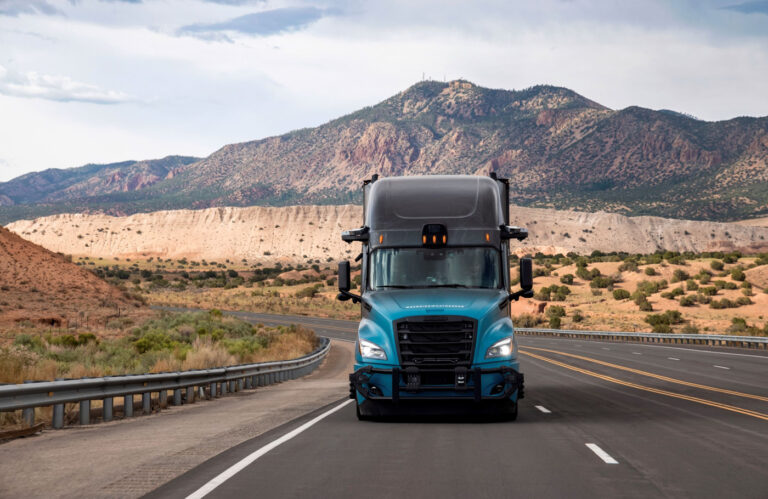
Peter Schmidt (PS): Yes, in our opinion, redundancy is a must for autonomous trucks. It is the only way to ensure maximum safety. Here we do not compromise. Our engineers at Daimler Truck North America have done a phenomenal job in the past few years, successfully developing the first scalable autonomous truck platform with critical safety systems. Based on Freightliner’s industry-leading flagship truck, the autonomous-ready Cascadia with redundant functions represents the foundation for autonomous trucking. This truck has a second set of critical systems, such as steering and braking, and continuously monitors and assesses the health of these systems. In case of interruption or errors, the newly developed redundant systems will be able to safely control the truck.