


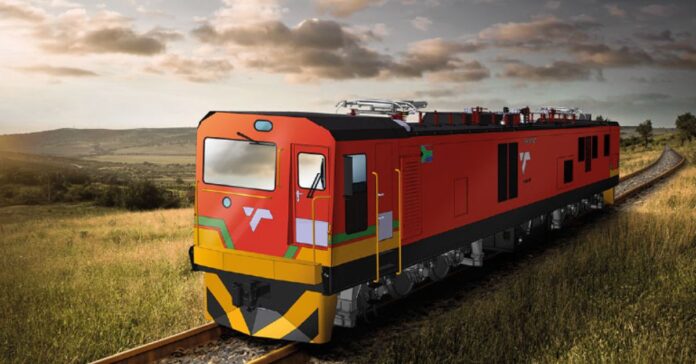
Minister of public enterprise Pravin Gordhan faces a mammoth task in trying to convince the Chinese government to rein in CRRC e-Loco Supply, a company whose impasse with Transnet has brought the embattled state-owned rail operator to its knees.
The woes facing Transnet has seen many mining houses forgo export income, a situation which also sees the fiscus losing out on taxes.
Exxarro, a mining and renewable energy company said this month that Transnet’s rail problems impacted its ability to export coal, with a year-on-year decline of 32% in its export volumes.
Coal mining house Thungela this week said it lost close to 3million tonnes of export saleable production volumes as a direct result of the poor Transnet Freight Rail performance. The group estimates this loss at about R7-billion in revenue.
Kumba Iron Ore has also slashed its production outlook for the next three years due to Transnet’s poor performance, which it said cost it R10-billion in lost sales.
The Minerals Council estimates bulk commodity exporters forfeited revenue of R50-billion in 2022 when deliveries of minerals by train to ports are measured against targets. In 2021, the loss was R35-billion. Minerals Council members are also reporting full stockpiles at their mines that they cannot send to ports.
President Cyril Ramaphosa this week summoned the leadership of Transnet and directed them to “implement reforms swiftly and completely to turn around the crisis in South Africa’s logistics system”.
“Despite the crisis facing Transnet, we must acknowledge the important progress that has been made in reversing the damage that was inflicted during state capture and recognise that there are many dedicated and hard-working people in the company who are committed to restoring Transnet to its potential,” Ramaphosa said in a statement.
“Transnet must quickly embark on a clear path to take us out of this crisis and ensure that the operation of our railways and ports contributes to the growth of our economy.”
The president’s remarks were followed by a statement from Transnet that Gordhan will visit China next month and meet his counterparts to try and resolve the impasse between it and CRRC, a company implicated in state capture.
Transnet in January said it has reached a deadlock with CRRC, following unwillingness on the part of CRRC to engage with the relevant authorities in South Africa to normalise its operations in the country.
Transnet said it would issue an open, competitive tender inviting any eligible Original Equipment Manufacturer to step in to rehabilitate the non-operational Chinese locomotives. But this effort seems to have yielded no results.
The CRRC locomotives directly impact three major Corridors (North, Northeast and Cape Corridors) that account for about 50% of Transnet Freight Rail’s revenue. The impacted corridors also support three primary mining sector segments, namely export coal, chrome, and manganese.
CRRC was formed out of a merger by China South Rail and China North Rail. The Zondo Commission found that the companies were corruptly awarded a tender in 2014 to supply Transnet with 1,064 locomotives.
The commission also found that Transnet’s then management approved an increase in the price of the locomotives from R38.6-billion to R54-billion with kickbacks paid to Gupta-linked entities. Less than half of the locomotives procured by Transnet were delivered, severely hindering its ability to transport goods.
The South African Revenue Services has since slapped CRRC with a tax bill of more than R3.6-billion.