


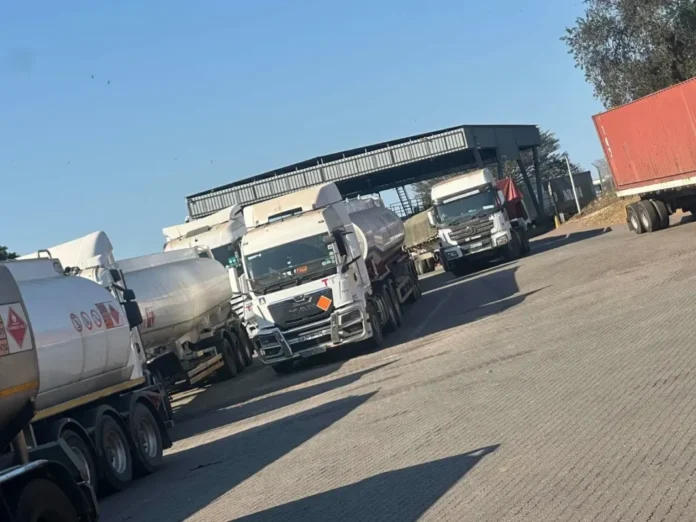
South Africa’s road freight and logistics industries have taken a significant step towards improving the efficiency of cross-border trade after the Road Freight Association (RFA) and the South African Freight and Logistics Association (SAFLA) signed a Memorandum of Understanding (MoU) aimed at tackling customs delays, border inefficiencies and rising supply chain costs.
The strategic partnership is expected to strengthen the industry’s voice when engaging government on critical issues affecting freight movement, including customs modernisation, border digitalisation, trade facilitation and regulatory reforms. The ultimate goal is to reduce delays that continue to cost transporters and businesses valuable time and money.
According to RFA CEO Gavin Kelly, the agreement reflects the reality that the road freight sector is closely connected to every part of the logistics chain.
Kelly said that by formally aligning with SAFLA, the RFA will be able to extend its advocacy efforts into the freight forwarding sector while presenting government with a united industry position instead of fragmented proposals.
“Multiple voices, speaking in concert, carry far greater weight than any one association speaking alone,” he added.
SAFLA Executive Officer Dave Logan echoed the sentiment, saying collaboration has become essential in an increasingly complex freight environment.
“Our members operate at the interface of customs, border management, regulatory compliance and international trade. They face challenges that no single association can resolve alone.”
He said SAFLA is particularly encouraged by the progress already being made through the South African Revenue Service (SARS) Stakeholder Forums, where the new partnership will bring stronger representation for road freight operators.
What the Partnership Means for Transporters
The Memorandum identifies several priority areas that directly affect freight operators, including:
- Faster customs clearance through modernised SARS processes.
- Digitalisation of Other Government Agency (OGA) procedures to reduce paperwork.
- Development of Smart Border systems.
- Improved trade facilitation between South Africa and neighbouring countries.
- Joint efforts to identify and resolve recurring supply chain bottlenecks.
- Capacity building and process mapping to improve operational efficiency.
For transport companies, clearing agents and freight forwarders, these initiatives could eventually translate into shorter border waiting times, lower administrative costs and more predictable delivery schedules.
Reducing manual processes and improving coordination between government agencies would also help minimise costly delays that ripple throughout the supply chain, benefiting transporters, exporters and importers alike.
Annual Review to Keep Progress on Track
The agreement, signed on 1 July 2026, will be reviewed annually by the chief executives of both organisations to ensure it continues addressing the evolving needs of South Africa’s freight and logistics industry.
As pressure grows to make South Africa’s trade corridors more competitive, the RFA and SAFLA believe a unified approach will help accelerate reforms that improve border efficiency, strengthen supply chains and reduce the cost of moving goods across the region.